



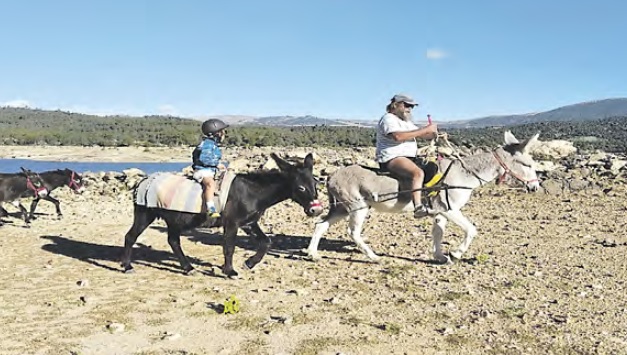
Ramón Narváez, especialista en equinoterapia, demuestra con sus animales como la burrita Carlota la perfecta adaptación del asno a esta práctica terapéutica
Fiel compañero del ser humano en las más duras labores durante milenios, el incierto futuro del burro (que de ser un animal habitual en el pasado ha llegado a estar en peligro de extinción en la actualidad) puede estar relacionado en su aplicación terapéutica en la que ya se conoce como “burroterapia” o “asnoterapia”.
Esta variante de la equinoterapia, en la que se utilizan asnos en lugar de caballos, se está revelando de gran utilidad para combatir diferentes tipos de dolencias y trastornos, desde el estrés, la ansiedad o la depresión hasta incluso la fibromialgia, y también como una herramienta de gran ayuda en terapias para niños afectados de TEA, parálisis cerebral o síndrome de Down.
Así lo están demostrando expertos y asociaciones por diferentes lugares de España y otros países tan distintos como Japón o México. Aquí en el Campo de Gibraltar y la Costa del Sol, contamos con Ramón Narváez, experto en equinoterapia e impulsor de su variante con burros que, desde hace tiempo, viene colaborando con diferentes entidades para ayudar tanto a niños como a mayores que padecen alguna enfermedad.
Narváez se incluye entre los especialistas en terapias con animales que aseguran que las especiales características del burro les hace ser idóneos para esta práctica, y sobre todo con niños, ya que al ser muy pacíficos y de menor tamaño que los caballos, los asnos son capaces de transmitir más seguridad en su contacto directo con los usuarios. De hecho, los defensores de la asnoterapia llegan a afirmar que los burros están incluso mejor adaptados para tratar con personas afectadas por desórdenes emocionales, dada su cariñosa naturaleza y su respeto instintivo al espacio personal.
La actividad de Ramón parte de tres puntos: Los Barrios, Estepona y Nueva Andalucía (Marbella), desde los que recibe o se desplaza con alguno de sus diez burros para ofrecer los múltiples beneficios que proporciona el contacto con estos animales, colaborando con diferentes entidades del Campo de Gibraltar y la Costa del Sol.
Un magnífico ejemplo de ello es su relación con la Asociación Pro-Personas con Discapacidad Intelectual del Campo de Gibraltar (ASANSULL), de amplia y reconocida trayectoria en la comarca, y con los que hace apenas un año comenzó sus primeras sesiones de burroterapia.
En su primer contacto, al que Ramón Narváez acudió con su burrita Carlota, ya se demostró la versatilidad de estos animales en su actividad terapéutica, ya que durante la jornada participaron miembros de Asansull de diferentes rangos de edad pertenecientes tanto a su Centro de Día para Personas con Trastornos del Espectro Autista (TEA), como usuarios de la Residencia para personas con Discapacidad Intelectual y Trastornos del Comportamiento.
Todos ellos disfrutaron de la presencia de Carlota, realizando actividades que fueron desde el acercamiento y contacto con el animal para familiarizarse a él, hasta incluso poder dar un paseo con la burrita.
Beneficios de la terapia con animales
Tal y como se ha ido demostrando a lo largo de las décadas, en general la terapia asistida con animales es capaz de proporcionar múltiples efectos positivos a pacientes con cualquier tipo de afección o discapacidad, ya sean relacionadas con la salud mental o de índole físico.
En el caso de los burros la interacción con estos animales está especialmente dirigida a niños con discapacidad con beneficiosos resultados tanto físicos y emocionales. La compañía de estos equinos les aporta tranquilidad, confianza y diversión, y supone un magnífico complemento a las terapias habituales recomendadas por médicos y especialistas
Contacto: Ramón Narváez. Teléfono 697 50 28 83
_______________________________________________
Asnotherapy, the next step in therapy with animals
Ramón Narváez, a specialist in equine therapy, demonstrates how perfectly the donkey adapts to this therapeutic practice using animals such as his donkey Carlota.
Faithful companion of the human being in the hardest labours for millennia, the uncertain future of the donkey (which from being a common animal in the past has become endangered nowadays) may be related to its therapeutic application in what is already known as ‘donkey therapy or ‘asnotherapy’.
This variant of equine therapy, in which donkeys are used instead of horses, is proving to be very useful in combating different types of ailments and disorders, ranging from stress, anxiety or depression to even fibromyalgia, and also as a very helpful tool in therapies for children affected by ASD, cerebral palsy or Down’s syndrome.
This is being proven by experts and associations in different parts of Spain and other countries across the world, such as Japan and Mexico. Here in Campo de Gibraltar and the Costa del Sol, we have Ramón Narváez, an expert in equine therapy and promoter of its donkey variant. He has been collaborating for some time with different entities to help both children and the elderly affected by illnesses.
Narváez is among the animal therapy specialists who claim that donkeys’ special characteristics make them ideal for this practice. This is particularly true with children, given that they are very peaceful and smaller than horses, making donkeys capable of conveying more security in their direct contact with users. In fact, advocates of donkey therapy go so far as to claim that donkeys are even better suited to dealing with people affected by emotional disorders, given their affectionate nature and instinctive respect for personal space.
Ramón’s work is based in three locations: Los Barrios, Estepona and Nueva Andalucía (Marbella), from where he receives or travels with any of his ten donkeys so as to offer the multiple benefits that contact with these animals provides, collaborating with different entities in the Campo de Gibraltar and the Costa del Sol.
A magnificent example of this is its relationship with the Association for People with Intellectual Disabilities of Campo de Gibraltar (ASANSULL), which has a long and recognised trajectory in the region, and with whom it began its first donkey therapy sessions just a year ago.
The versatility of these animals in their therapeutic activity was already demonstrated in their first appointment, which Ramón Narváez attended with his donkey Carlota. During the day, members of Asansull of different age ranges from both the Day Centre for people with Autism Spectrum Disorders (ASD) and users of the Residence for people with Intellectual Disabilities and Behavioural Disorders participated in the event.
They all enjoyed Carlota’s presence, participating in activities that ranged from getting close to the animal to familiarise themselves with it, to even being able to take a walk with the donkey.
Benefits of therapy with animals
As has been demonstrated over the decades, animal-assisted therapy in general is capable of providing multiple positive effects to patients with any type of condition or disability, whether related to mental health or of a physical nature.
For instance, the interaction with donkeys is especially aimed at children with disabilities and has had beneficial results both physically and emotionally. The companionship of these animals provides them with tranquillity, confidence and fun, and is a magnificent addition to the usual therapies recommended by doctors and specialists.
Contact details: Ramón Narvaez. +34 697 50 28 83