

por Om28 Architects
La arquitectura equina contemporánea combina tradición y nuevas exigencias de bienestar animal, sostenibilidad y eficiencia. Diseñar espacios para caballos requiere comprender sus necesidades físicas y conductuales, así como integrar las construcciones en su entorno natural.
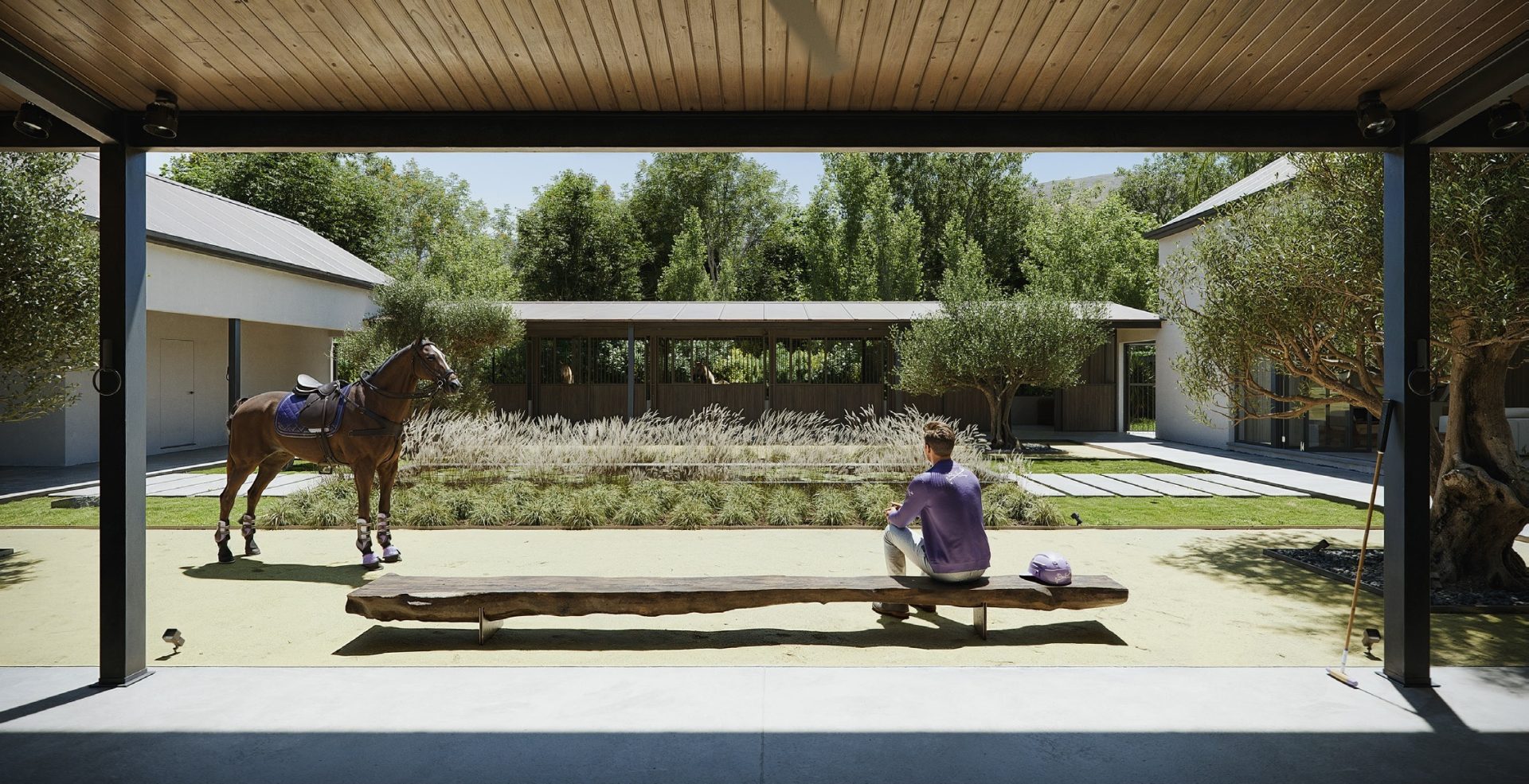
Un complejo ecuestre bien concebido se organiza habitualmente en torno a patios abiertos, favoreciendo la ventilación cruzada, la entrada de luz natural y la conexión visual entre caballo, cuidador y paisaje. La disposición de cuadras, picaderos, zonas de entrenamiento y espacios auxiliares responde a una lógica funcional clara, optimizando desplazamientos y garantizando la seguridad.
El diseño arquitectónico se adapta al terreno, articulando pabellones con cubiertas inclinadas y amplios aleros que protegen del sol y permiten la ventilación sin cerrar las vistas. Se busca que la arquitectura dialogue con el paisaje, generando espacios abiertos, serenos y saludables.
Los materiales utilizados son esenciales: techos de madera vista, estructuras metálicas ligeras y cerramientos permeables aseguran ambientes confortables y bien ventilados. Se prioriza el uso de soluciones naturales, resistentes y de bajo mantenimiento, aportando autenticidad y calidez a los espacios.
La integración de vegetación autóctona en patios ajardinados contribuye al confort térmico, proporciona sombra y crea transiciones amables entre lo construido y el entorno. El agua, la luz y la orientación se consideran estratégicamente para optimizar el rendimiento ambiental de las instalaciones.
En lugares como Sotogrande, donde la tradición del polo está profundamente arraigada, estas premisas adquieren una especial relevancia .Desde OM28 Architects hemos explorado esta tipología desde una perspectiva contemporánea, conjugando técnica, estética y respeto por la cultura ecuestre.
La arquitectura equina moderna incorpora también estrategias de sostenibilidad: captación de luz natural, control pasivo de temperatura, uso de energías renovables y recolección de aguas pluviales, reduciendo la huella ecológica de cada proyecto.
En definitiva, la arquitectura destinada al mundo equino no solo atiende las necesidades funcionales del caballo y de sus cuidadores. Crea espacios de alta calidad ambiental, operativos y estéticamente integrados, que elevan la experiencia ecuestre y refuerzan el vínculo con la naturaleza.
________________________________
Equine Architecture: Functional Design, Animal Welfare, and Harmony with the Environment
Modern equine architecture combines traditional principles with evolving demands for animal welfare, sustainability, and functional efficiency. Designing spaces for horses requires a deep understanding of their physical and behavioural needs, while also ensuring the built environment harmonises with the natural surroundings.
A well-conceived equestrian complex is typically organised around open courtyards, encouraging cross ventilation, natural light, and a visual connection between horse, caretaker, and landscape. The layout of stables, riding arenas, training zones, and auxiliary areas follows a clear functional logic, streamlining movement and ensuring safety.
Architectural design adapts to the terrain, incorporating pavilions with sloping roofs and generous overhangs that offer solar protection while enabling ventilation and maintaining unobstructed views. The aim is to create a dialogue between architecture and nature, generating open, serene, and healthy environments.
Materials play a crucial role: exposed timber roofs, lightweight metal structures, and breathable enclosures provide comfortable, well-ventilated spaces. The emphasis is on natural, durable, low-maintenance solutions that bring authenticity and warmth to the setting.
The integration of native vegetation into landscaped courtyards enhances thermal comfort, provides natural shade, and creates gentle transitions between built structures and the surrounding environment. Elements such as water, light, and orientation are strategically considered to optimise the environmental performance of the facilities.
In locations like Sotogrande, where the tradition of polo runs deep, these design principles take on particular significance. At OM28 Architects, we have explored this architectural typology from a contemporary standpoint, blending technical precision, aesthetic value, and a deep respect for equestrian culture.
Modern equine architecture also embraces sustainability strategies: harnessing natural light, passive temperature control, the use of renewable energy sources, and rainwater harvesting — all contributing to a reduced ecological footprint.
Ultimately, architecture dedicated to the equestrian world goes beyond meeting the functional needs of horses and their caretakers. It creates high-quality environments — operational, environmentally conscious, and visually harmonious — that elevate the equestrian experience and deepen our connection with nature.