




Por OM28 Architects
Existe una forma de entender la arquitectura que comienza mucho antes de dibujar una planta o elegir unos materiales. Comienza observando el lugar.
Cada parcela posee unas características únicas. La vegetación existente, la orientación solar, los recorridos naturales del agua, las zonas de sombra, las corrientes de aire o la presencia de elementos paisajísticos singulares forman parte de una realidad previa que merece ser observada y comprendida antes de comenzar a diseñar. Sin embargo, durante años fue habitual plantear la vivienda como un elemento ajeno a su entorno natural, modificando este para que se adaptara a la arquitectura proyectada.
Hoy, cada vez más propietarios buscan precisamente lo contrario: viviendas capaces de integrarse de manera natural en el lugar donde se implantan.
Adaptar una casa a la naturaleza significa comprender las características del entorno y convertirlas en una oportunidad para crear una vivienda mejor.
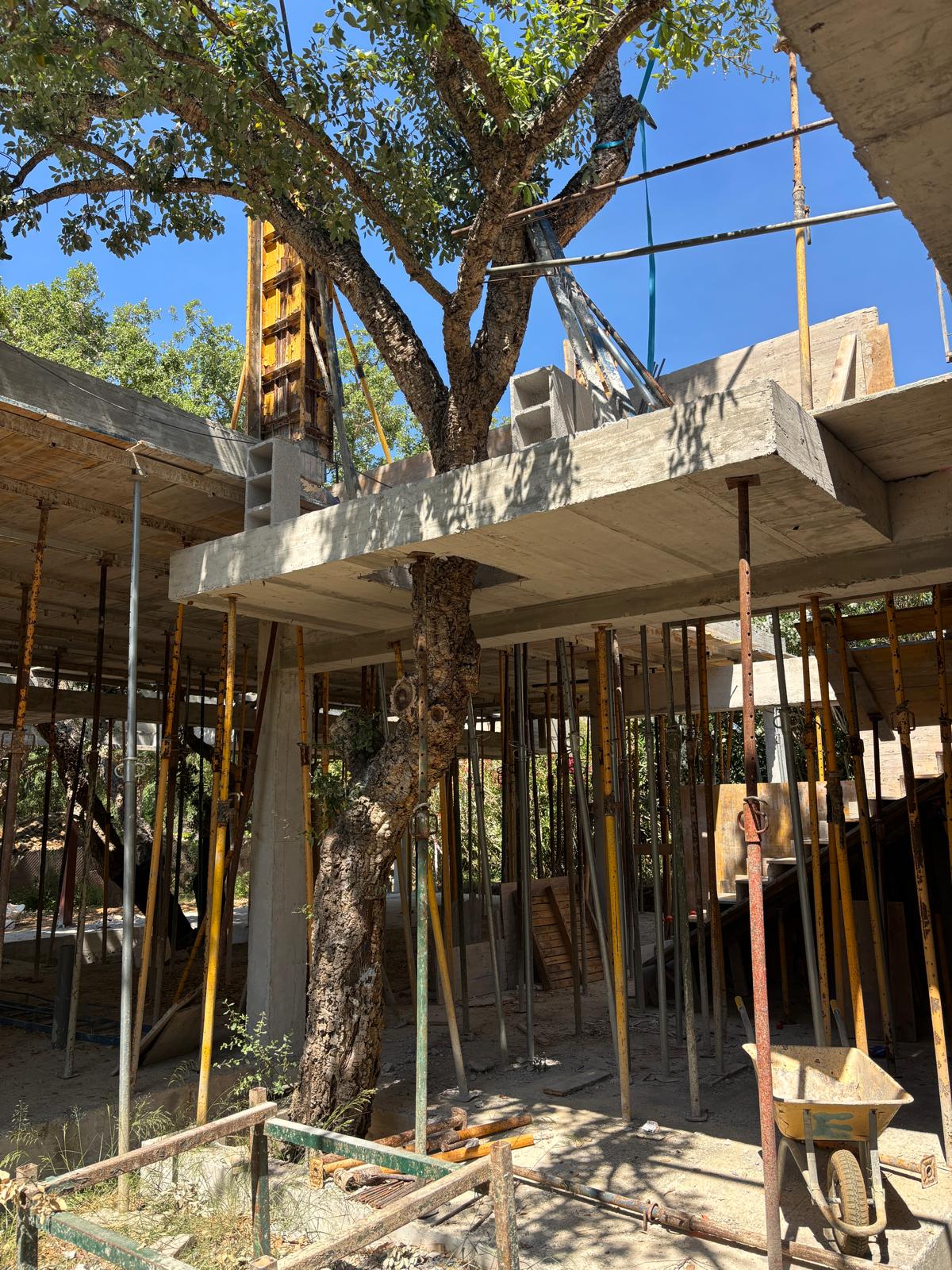
Un grupo de árboles consolidados puede transformarse en el elemento protagonista del proyecto, aportando sombra, carácter y una relación más estrecha con el paisaje. La disposición de la vivienda puede adaptarse a los ciclos naturales de luz y sombra, mejorando el confort y reforzando la conexión con el exterior.
Cuando la arquitectura nace de la observación de la naturaleza que rodea una vivienda, el resultado suele percibirse como algo más auténtico y coherente, como si la casa siempre hubiera pertenecido a ese lugar.
La naturaleza debe entenderse como una fuente de inspiración. Los árboles consolidados, la vegetación autóctona, la luz natural, las sombras o incluso los sonidos del entorno pueden convertirse en aliados del proyecto y ayudar a crear espacios que difícilmente podrían reproducirse en otro lugar.
Esta integración también influye en la forma en que se vive la vivienda. Los espacios interiores y exteriores se relacionan de manera más natural, la vegetación pasa a formar parte de la experiencia diaria y la presencia constante de la naturaleza aporta una sensación de bienestar difícil de conseguir cuando la arquitectura se impone sobre el lugar. El resultado suele ser una vivienda más conectada con su entorno y con el modo de vida de quienes la habitan.
La mejor arquitectura en muchas ocasiones es aquella que sabe interpretar sus cualidades y potenciarlas.
Cuando la arquitectura aprende a dialogar con la vegetación, la luz, el paisaje y las condiciones naturales del entorno en lugar de imponerse sobre ellas, el resultado suele ser más coherente, más auténtico y conectado con el lugar.
Porque cada emplazamiento tiene una identidad propia. Y cuando el diseño es capaz de escucharla, la vivienda resultante no solo funciona mejor, sino que adquiere una personalidad imposible de reproducir en cualquier otro lugar.
___________________________
By OM28 Architects
What if the house adapted to nature?
There is an approach to architecture that begins long before a floor plan is drawn or a single material is chosen. It begins with observation.
Every plot of land possesses its own distinct DNA. The existing flora, the path of the sun, natural water courses, pockets of shade, wind currents, and unique topographical features form a pre-existing reality that demands to be studied and understood before the design process ever starts. For decades, however, the conventional approach was to treat a home as an entity entirely detached from its surroundings—subjugating the landscape to fit the blueprint.
Today, a growing number of homeowners are seeking quite the opposite: dwellings that weave themselves seamlessly into the terrain they inhabit.
Adapting a house to nature is not a compromise on design, nor does it mean sacrificing the aspirations of its residents. Rather, it means unlocking the inherent characteristics of the site and transforming them into opportunities to build a superior home.
A mature cluster of trees, for instance, can become the centerpiece of a project, providing natural canopy, architectural character, and a more intimate dialogue with the landscape. The layout of the house can be tailored to the natural cycles of light and shadow, optimizing thermal comfort while blurring the boundary between indoors and out. Even the positioning of individual rooms can dictate how the surrounding greenery, sunlight, and vistas are experienced from different vantage points across the property.
When architecture is born from a deep observation of its surroundings, the result feels inherently authentic and coherent—as though the house has always belonged there.
Nature should never be viewed as a constraint, but as a muse. Mature trees, indigenous planting, natural light, shadow plays, and even ambient sounds can become vital design allies, helping to create spaces that could never be replicated anywhere else.
This integration fundamentally shapes how a home is lived in. Interior and exterior spaces flow into one another, nature becomes woven into the fabric of daily life, and the constant presence of the landscape fosters a sense of well-being that is nearly impossible to capture when a building simply imposes itself on a site. The end result is a home deeply attuned both to its environment and to the lifestyle of its occupants.
The finest architecture is not always that which alters a site most drastically. More often than not, it is the architecture that successfully interprets and elevates its existing qualities.
The natural world is not an obstacle to be cleared for construction, but an asset that enriches a project and lends it a singular identity. When design learns to converse with vegetation, light, landscape, and climate rather than dominant them, the architecture becomes more cohesive, more genuine, and rooted in its place.
Every site has a unique voice. When a design truly listens, the resulting home does not just function better—it acquires a distinct soul that is impossible to recreate anywhere else in the world.
— OM28 Architects