




Por OM28 Architects
Cuando se proyecta una vivienda, solemos pensar en la orientación, las vistas, la luz natural o la topografía de la parcela. Sin embargo, existe otro factor, invisible pero determinante, que condiciona el diseño desde el primer boceto: el viento
En un entorno como Sotogrande, donde el Levante y el Poniente forman parte del día a día, conocer el comportamiento de ambos resulta esencial para crear viviendas más confortables, eficientes y duraderas.
Cada parcela presenta unas condiciones particulares, pero el viento siempre deja su huella. No solo influye en el confort de quienes habitan la vivienda, sino también en su conservación, en el comportamiento de los materiales e incluso en el uso de los espacios exteriores.
El Levante, procedente del Mediterráneo, se caracteriza por su elevada humedad y su persistencia. Puede mantenerse durante varios días, generando una acusada sensación de bochorno y transportando partículas de sal que se depositan sobre fachadas, carpinterías, cristales y elementos metálicos, acelerando el envejecimiento de algunos materiales si no se han elegido o protegido adecuadamente.
El Poniente, por el contrario, llega desde el oeste con un aire más seco y una atmósfera más limpia. En verano puede alcanzar temperaturas elevadas, aunque su menor humedad hace que la sensación térmica sea distinta a la del Levante. Una vivienda bien diseñada puede aprovechar estas condiciones mediante la ventilación natural, reduciendo la necesidad de climatización y mejorando el confort.
Por ello, muchas decisiones que aparentemente responden únicamente a criterios estéticos tienen, en realidad, un importante fundamento climático. La orientación de un porche, la ubicación de una terraza, el diseño de un patio, la posición de una piscina o la elección de la vegetación buscan crear espacios protegidos cuando el viento es más intenso y abiertos a las brisas más favorables.
La arquitectura de calidad no consiste en imponerse al entorno, sino en comprenderlo y aprovecharlo. Una vivienda bien adaptada al clima ofrece mayor bienestar, consume menos energía y envejece mejor con el paso de los años. Son aspectos que rara vez llaman la atención a primera vista, pero que se perciben cada día en la forma de vivir la casa.
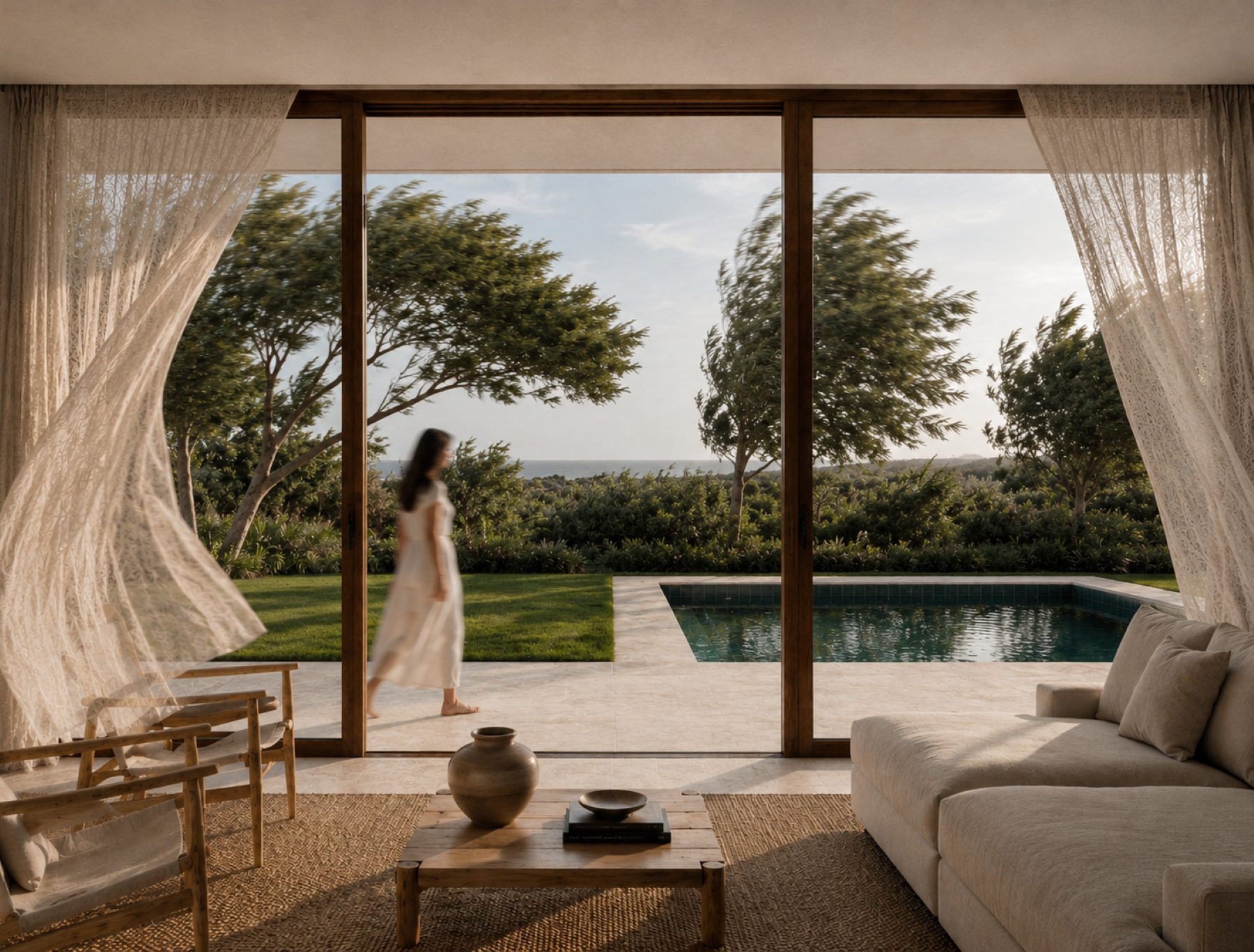
Porque el viento también forma parte del proyecto. Aunque nunca aparezca representado en un plano, está presente en la terraza que puede disfrutarse durante todo el año, en el jardín que protege del bochorno del Levante o en la brisa que atraviesa la vivienda durante una tarde de verano. Y esa capacidad de dialogar con el entorno es, probablemente, una de las mayores virtudes de la buena arquitectura.
____________________________
Levante and Poniente: two winds that shape a home
When designing a home, we naturally tend to focus on orientation, views, natural light, or the topography of the plot. However, there is another factor—invisible yet decisive—that shapes the design from the very first sketch: the wind. In an environment like Sotogrande, where the Levante and Poniente winds are part of daily life, understanding how both behave is essential for creating homes that are more comfortable, efficient, and durable.
Every plot has its own unique conditions, but the wind always leaves its mark. It influences not only the comfort of those who live in the house, but also its preservation, the behavior of materials, and even the use of outdoor spaces.
The Levante, blowing in from the Mediterranean, is characterized by its high humidity and persistence. It can linger for days, creating a pronounced, muggy heat and carrying salt particles that settle on facades, window frames, glass, and metal elements. This accelerates the aging of certain materials if they haven’t been correctly chosen or protected.
The Poniente, by contrast, arrives from the west with a drier air and a clearer atmosphere. In summer, it can bring high temperatures, though its lower humidity makes the perceived heat quite different from that of the Levante. A well-designed home can harness these conditions through natural ventilation, reducing the need for air conditioning and enhancing overall comfort.
Consequently, many decisions that seemingly serve purely aesthetic criteria actually have a deep-seated climatic purpose. The orientation of a porch, the positioning of a terrace, the layout of a courtyard, the location of a swimming pool, or the choice of vegetation all seek to create sheltered spaces when the wind is at its fiercest, and open areas to catch the more favorable breezes.
Quality architecture is not about imposing oneself on the environment, but about understanding and embracing it. A home well-adapted to the climate offers greater well-being, consumes less energy, and ages more gracefully over the years. These are aspects that rarely catch the eye at first glance, but are felt every single day in the way a home is lived in.
Because the wind, too, is part of the blueprint. Even if it never appears drawn on a plan, it is present on the terrace that can be enjoyed year-round, in the garden that shelters from the mugginess of the Levante, or in the breeze flowing through the house on a summer afternoon. And that ability to converse with the environment is, perhaps, one of the greatest virtues of good architecture.