

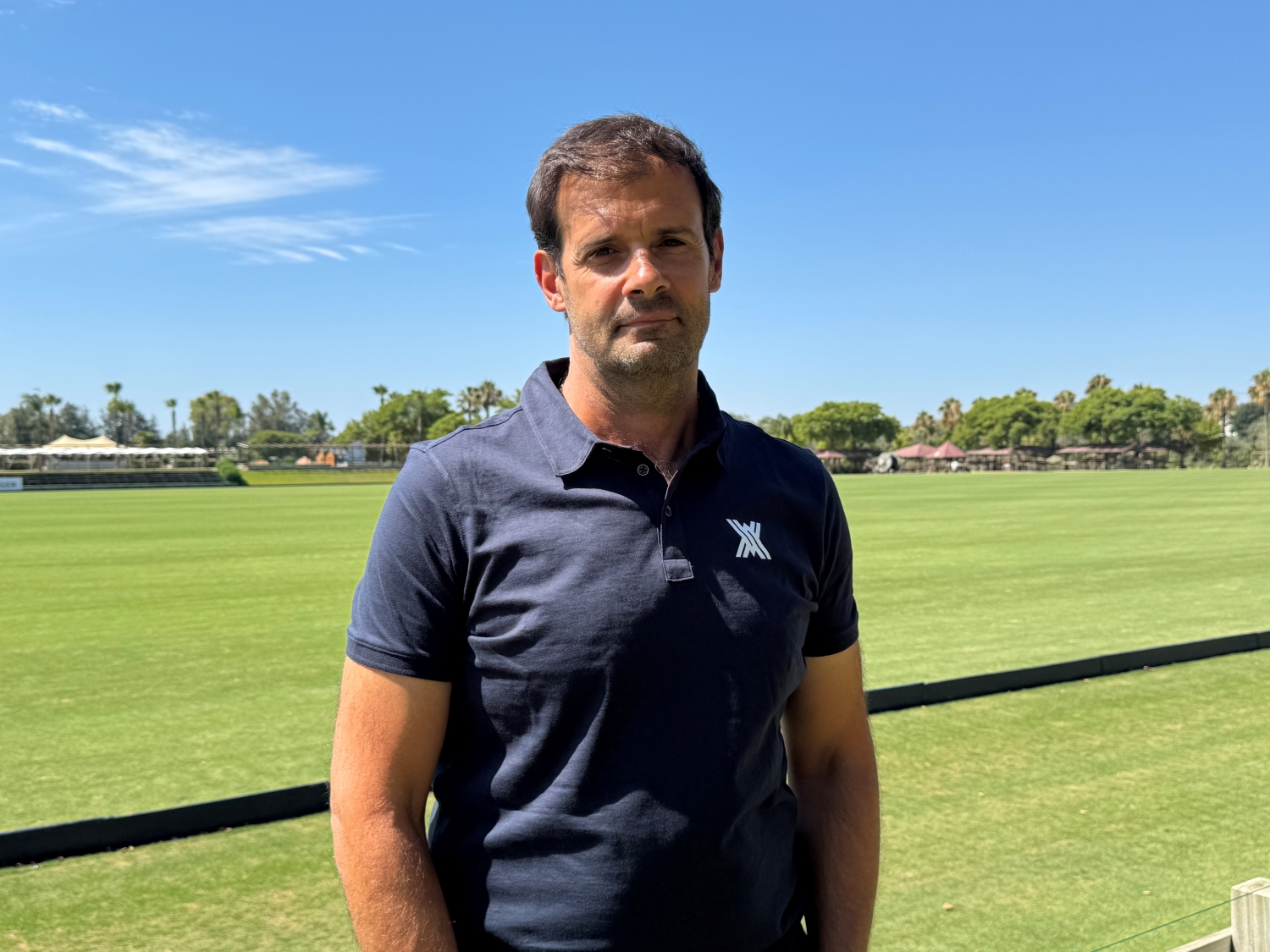
El responsable de las instalaciones de Ayala Polo Club explica el trabajo diario que hay detrás de unas canchas consideradas entre las mejores del mundo, además de recordar el enorme reto que afrontaron tras las inundaciones del pasado invierno
Las imágenes de principios de año hablaban por sí solas. Las canchas de Sotogrande, uno de los grandes escenarios internacionales del polo, aparecían cubiertas por más de seis metros de agua tras los fuertes y sucesivos temporales que azotaron la zona. Un paisaje impensable para quienes cada verano disfrutan del espectáculo del polo en unas superficies cuidadas al milímetro.
Detrás de la recuperación de esas canchas hay una historia de esfuerzo, compromiso y muchas horas de trabajo. Sebastián Viera, Manager General de Ayala Polo Club y responsable del mantenimiento de las canchas, nos detalla cómo consiguieron devolver el terreno a su estado óptimo para poder afrontar una nueva temporada internacional.
Cuando por fin pasaron las inundaciones, ¿cuál fue tu primera sensación al ver cómo estaba todo?
Lo primero que pensé fue: “de aquí a cuatro meses empieza el polo y en seis meses tenemos un torneo internacional que ya está comprometido”. Había jugadores, equipos y mucha gente que tenía previsto venir. Debíamos tener las canchas sí o sí, y además tenerlas en condiciones.
No era simplemente dejar que creciera el césped. Había que limpiar todo el barro, recuperar la seguridad de las canchas y conseguir que estuvieran al nivel de juego que exige Ayala. Era un reto muy grande.
Además hubo varias inundaciones durante ese invierno, no fue un único episodio
Hubo tres. Dos previas y luego la última, que fue la más fuerte. Después seguía lloviendo y eso tampoco nos permitía entrar a trabajar, el terreno no estaba en condiciones.
Cuando pudimos entrar, empezamos a trabajar con todo el equipo. Estuvimos 24 horas al día, con dos grupos de trabajo de 12 horas. Fue así durante un mes, sin descansar sábados ni domingos. Hay que agradecer muchísimo la implicación del equipo.
Ese esfuerzo demuestra la importancia del equipo humano que hay detrás de Ayala
Totalmente. Lo más importante fue el equipo humano. Tener gente dispuesta a involucrarse de esa manera, fue fundamental.
Además, hay que recordar que durante la inundación Ayala también recibió a unos 400 caballos de personas de toda la zona que necesitaban refugio. Estuvimos ayudando a meterlos, atenderlos, darles comida… durante más de una semana prácticamente sin parar. Y después de eso vino el otro reto: recuperar las canchas.
Llevas más de 20 años vinculado a Ayala. ¿Cómo ha sido tu trayectoria?
Llevo 21 años. Empecé con esta nueva etapa del club, allá por 2005-2006, con Íñigo y la familia Zóbel. Comencé en diferentes áreas, con las cuadras, las canchas y otras tareas, y poco a poco fui especializándome más en la parte de mantenimiento de cancha, jardinería y cuadras.
Después hice la formación de greenkeeper, porque ya tenía una base de agronomía, pero quería profundizar más en todos los detalles del cuidado del césped.
Durante la temporada, ¿cómo es un día normal de mantenimiento?
El mantenimiento es continuo. Hay riego, corte y fertilización. Algunas cosas se hacen diariamente y otras semanalmente dependiendo de lo que necesite el césped.
Además, trabajamos muchas veces de noche. Los riegos se hacen cuando hay menos evaporación, hay tratamientos de aireación que también se realizan fuera del horario de juego… Al final es un trabajo de 24 horas.
Si tuvieras que definir el cuidado de una cancha de polo en tres palabras, ¿cuáles serían?
Corte, mimo y riego. Pero añadiría una cuarta: que te guste tu trabajo. Porque si no disfrutas con lo que haces, es imposible llegar al nivel que buscamos.
Las canchas sufren mucho durante los partidos ¿Cómo conseguís mantenerlas siempre en perfectas condiciones?
Lo principal es mantener el suelo en un punto óptimo, sobre todo pensando en los caballos. Estamos hablando de animales de mucho valor y lo importante es que puedan jugar sin riesgo de lesiones.
También hay que conseguir que el césped y el terreno aguanten para que el siguiente partido esté en las mismas condiciones que el anterior. Eso requiere saber cuándo regar, cuándo cortar, cuándo airear o cuándo hacer recebos con arena.
Muchos jugadores y patrones destacan que estas canchas están entre las mejores del mundo…
Yo no soy quien debe decir si son las mejores… pero creo que aquí le ponemos mucho mimo todos los trabajadores que estamos cada día encima de las canchas. La clave es levantarte cada día pensando: “mañana quiero tenerlas mejor que hoy”.
Que se valoren así nuestras canchas es una satisfacción enorme, que comparto con el resto de los compañeros, porque son los que tienen gran parte del mérito. . Como digo siempre, yo soy uno más de ellos. Si ellos no hacen bien su trabajo y no ponen esa implicación, esto sería imposible.
¿De dónde procede el agua para el riego?
Utilizamos agua regenerada procedente de Sotogrande. Es agua que se trata y se reutiliza para riego pero que no es potable ni apta para el consumo humano.
Está regulada, tiene sus análisis y es apta para el riego. Prácticamente todo lo que utilizamos para las canchas y la jardinería procede de ahí.
Después de lo vivido este invierno, ¿qué mensaje te gustaría transmitir sobre el trabajo que hay detrás de una temporada de polo?
Que se valore al personal. Muchas veces solo se ve el resultado final, pero detrás hay muchísimas personas trabajando.
Aquí no hay horarios. Puedes tener un problema de riego a las tres de la mañana antes de una final y tienes que solucionarlo porque al día siguiente hay que jugar. No puedes parar.
Todo funciona porque cada persona hace su parte y confía en el trabajo del compañero. Creo que esa es la clave de Ayala: que todos remamos en la misma dirección.
Muchas gracias por la entrevista Sebas, enhorabuena por el gran trabajo que realizáis
__________________________________
Sebastián Viera: “we work around the clock for a month to restore the courts”
The head of grounds at Ayala Polo Club explains the meticulous work behind maintaining courts regarded among the finest in the world, while reflecting on the enormous challenge of restoring them after last winter’s floods.
The images from earlier this year spoke for themselves. Sotogrande’s polo fields, among the world’s leading venues for the sport, lay submerged beneath more than six metres of water after a succession of severe storms swept through the area. It was an almost unimaginable sight for those accustomed to watching world-class polo each summer on impeccably maintained pitches.
Behind the remarkable recovery of those grounds lies a story of dedication, resilience and countless hours of hard work. Sebastián Viera, General Manager of Ayala Polo Club and the man responsible for maintaining its playing fields, explains how his team succeeded in restoring the pitches to peak condition in time for another international season.
When the floodwaters finally receded, what was your first reaction to seeing the condition of the grounds?
The first thing I thought was, “In four months the polo season begins, and in six months we have an international tournament already committed.” Players, teams and visitors were already planning to come, so the fields had to be ready, there was simply no alternative.
It wasn’t just a matter of waiting for the grass to grow back. We had to remove all the mud, restore the playing surfaces so they were completely safe, and bring them back to the standard expected at Ayala. It was a huge challenge.
There were several floods that winter, not just one.
There were three. Two earlier floods, followed by the last one, which was by far the most severe. Even afterwards, the rain continued, which meant we couldn’t begin work immediately because the ground simply wasn’t accessible.
As soon as we were able to get onto the fields, the entire team got to work. We operated around the clock with two 12-hour shifts, working continuously for a month without a single day off, including weekends. The commitment shown by everyone involved was extraordinary.
That effort really highlights the importance of the team behind Ayala.
Absolutely. The people were the most important part of the recovery. Having a team willing to commit themselves in that way made all the difference.
It’s also worth remembering that during the floods Ayala sheltered around 400 horses belonging to owners from across the area who needed somewhere safe. For more than a week we were helping to receive them, care for them and feed them, almost without stopping. Only after that could we begin the second challenge: restoring the polo fields.
You’ve been part of Ayala for more than 20 years. How has your journey evolved?
I’ve been here for 21 years. I joined during the club’s new chapter, around 2005–06, alongside Íñigo and the Zóbel family. I started working across several areas, including the stables, the grounds and general operations, before gradually specialising in pitch maintenance, landscaping and stable management.
Later, I qualified as a greenkeeper. I already had a background in agronomy, but I wanted to develop a much deeper understanding of turf management and every aspect of maintaining world-class playing surfaces.
During the season, what does a typical day look like?
Maintenance never stops. There is irrigation, mowing and fertilisation. Some tasks are carried out every day, while others depend on what the grass needs that particular week.
A great deal of the work also takes place overnight. Irrigation is scheduled when evaporation is at its lowest, while aeration and other maintenance procedures are often carried out outside playing hours. In reality, it’s a 24-hour operation.
If you had to describe maintaining a polo field in three words, what would they be?
Mowing, care and irrigation. But I’d add a fourth: passion. If you don’t genuinely enjoy what you do, it’s impossible to achieve the standard we’re aiming for.
The fields endure enormous wear during matches. How do you keep them in such exceptional condition?
The priority is always to keep the ground in optimum condition, above all for the horses. These are extremely valuable animals, and our responsibility is to ensure they can play safely, without unnecessary risk of injury.
At the same time, the surface has to recover quickly enough for the next match to be played under exactly the same conditions. That means knowing precisely when to irrigate, mow, aerate or apply sand topdressing. Every decision matters.
Many players and patrons describe these as some of the finest polo fields in the world…
I’m not the person who should make that claim, but I do believe everyone working here puts an enormous amount of care into these grounds every single day. Our mindset is always the same: tomorrow the fields should be even better than they are today.
Hearing such praise is incredibly rewarding, but it’s something I share with every member of the team because they deserve most of the credit. As I always say, I’m simply one of them. Without their commitment and professionalism, none of this would be possible.
Where does the irrigation water come from?
We use reclaimed water supplied from Sotogrande. It’s treated and recycled specifically for irrigation. It’s not drinking water and isn’t suitable for human consumption.
The water is fully regulated, regularly tested and perfectly suitable for irrigating both the polo fields and the landscaped areas. Virtually all the water we use comes from this recycled supply.
After everything that happened this winter, what message would you like people to take away about the work behind a polo season?
I’d simply like people to appreciate those working behind the scenes. Most people only see the finished result, but there are countless individuals making it possible.
There are no fixed working hours. If an irrigation system fails at three o’clock in the morning before a major final, you fix it because play begins the next day. Stopping simply isn’t an option.
Everything works because every member of the team does their job and trusts everyone else to do theirs. I believe that’s the essence of Ayala, we’re all pulling in the same direction.
Thank you very much for your time, Sebas, and congratulations to you and the entire team on the outstanding work you do.