

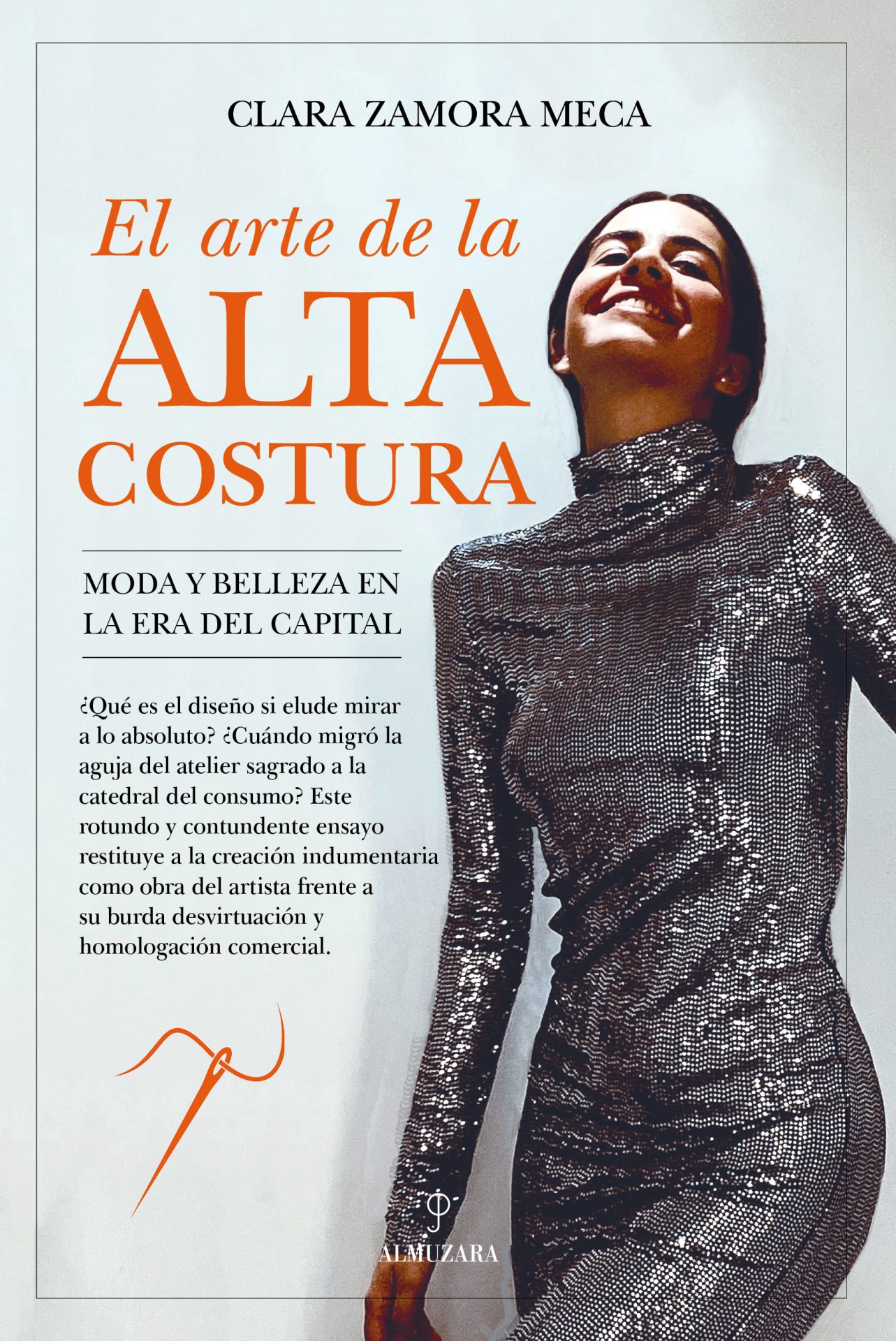
Frente a la desvirtuación comercial y el consumo masivo de nuestra era, Clara Zamora Meca reivindica en su nuevo ensayo la moda como una de las bellas artes, capaz de saciar anhelos de inmortalidad.
En un presente donde lo efímero se dicta a golpe de algoritmo, cabe preguntarse: ¿dónde se refugia el arte tras el naufragio de la pintura en la confusión posmoderna? Esta es la sugerente premisa de la que parte Clara Zamora Meca en su último ensayo, El arte de la alta costura
Para la autora, Doctora en Historia del Arte, docente y comisaria de exposiciones, la alta costura no es simplemente una industria de lujo, sino el escenario de una epifanía estética. El libro propone un viaje hacia ese instante en que la aguja, liberada de la obligación mercantil por la irrupción del prêt-à-porter, conquistó su lugar en la esfera de lo sublime. Es entonces cuando las pasarelas europeas dejaron de ser escaparates para convertirse en templos donde la tela echaba a volar hacia intensidades reservadas a la ópera o al cine.
A través de este contundente texto, Zamora Meca restituye la creación indumentaria como una obra del artista. Analiza cómo figuras de la talla de Alexander McQueen bebieron del horror de la cultura gótica; cómo John Galliano abrazó las máscaras cortesanas del París del XVIII; o cómo Saint Laurent rescató del cine de Hollywood a una mujer moderna y vanguardista, ataviada con un smoking arrebatador.
Sin embargo, el ensayo es también una crítica mordaz a la era del capital. La autora cuestiona qué queda del diseño cuando este elude mirar a lo absoluto y se entrega a la homologación comercial. En un mundo dominado por la virtualidad de las pantallas, estas líneas son una invitación a recuperar la fantasía del papel couché y a entender la prenda como un vehículo para la trascendencia.
El arte de la alta costura nos recuerda que, frente a las fauces del mercado, siempre nos quedará el refugio de lo estético: una oportunidad necesaria para volver a vestir almas en vez de cuerpos.
_________________
The art of haute couture: the last refuge of beauty?
In the face of the commercial distortion and mass consumption of our era, Clara Zamora Meca defends in her new essay fashion as one of the fine arts, capable of satisfying longings for immortality.
In a present where the ephemeral is dictated by algorithms, one must ask: where does art take refuge after the shipwreck of painting in postmodern confusion? This is the suggestive premise from which Clara Zamora Meca begins her latest essay, The Art of Haute Couture.
For the author, Doctor of Art History, lecturer and exhibition curator, haute couture is not simply a luxury industry but the setting for an aesthetic epiphany. The book proposes a journey to that moment when the needle, freed from its commercial obligation by the arrival of prêt-à-porter, claimed its place in the sphere of the sublime. It was then that the European catwalks ceased to be shop windows and became temples where fabric took flight towards intensities once reserved for opera or cinema.
Through this compelling text, Zamora Meca restores clothing design as a work of the artist. She analyses how figures such as Alexander McQueen drew from the horror of Gothic culture; how John Galliano embraced the courtly masks of eighteenth-century Paris; and how Saint Laurent rescued from Hollywood cinema a modern, avant-garde woman dressed in a striking tuxedo.
However, the essay is also a sharp critique of the age of capital. The author questions what remains of design when it avoids looking towards the absolute and instead surrenders to commercial standardisation. In a world dominated by the virtuality of screens, these pages invite us to recover the fantasy of glossy magazine paper and to understand the garment as a vehicle for transcendence.
The Art of Haute Couture reminds us that, in the face of the jaws of the market, we will always have the refuge of the aesthetic: a necessary opportunity to dress souls rather than bodies.