
La comarca afronta un punto de inflexión en la gran feria internacional del turismo, con un nuevo modelo de presentación para el que se preparan los diferentes ayuntamientos de la zona y la Mancomunidad
El Campo de Gibraltar volverá a estar presente en FITUR en 2026, y comenzamos el nuevo año analizando este importante evento en nuestros ‘Encuentros de SGplus’, en una edición en la que se avecinan novedades muy destacadas en su formato para los municipios campogibraltareños y del resto de la provincia. Un giro de guión que obliga a repensar discursos, formatos y estrategias, en un escenario cada vez más competitivo y globalizado.
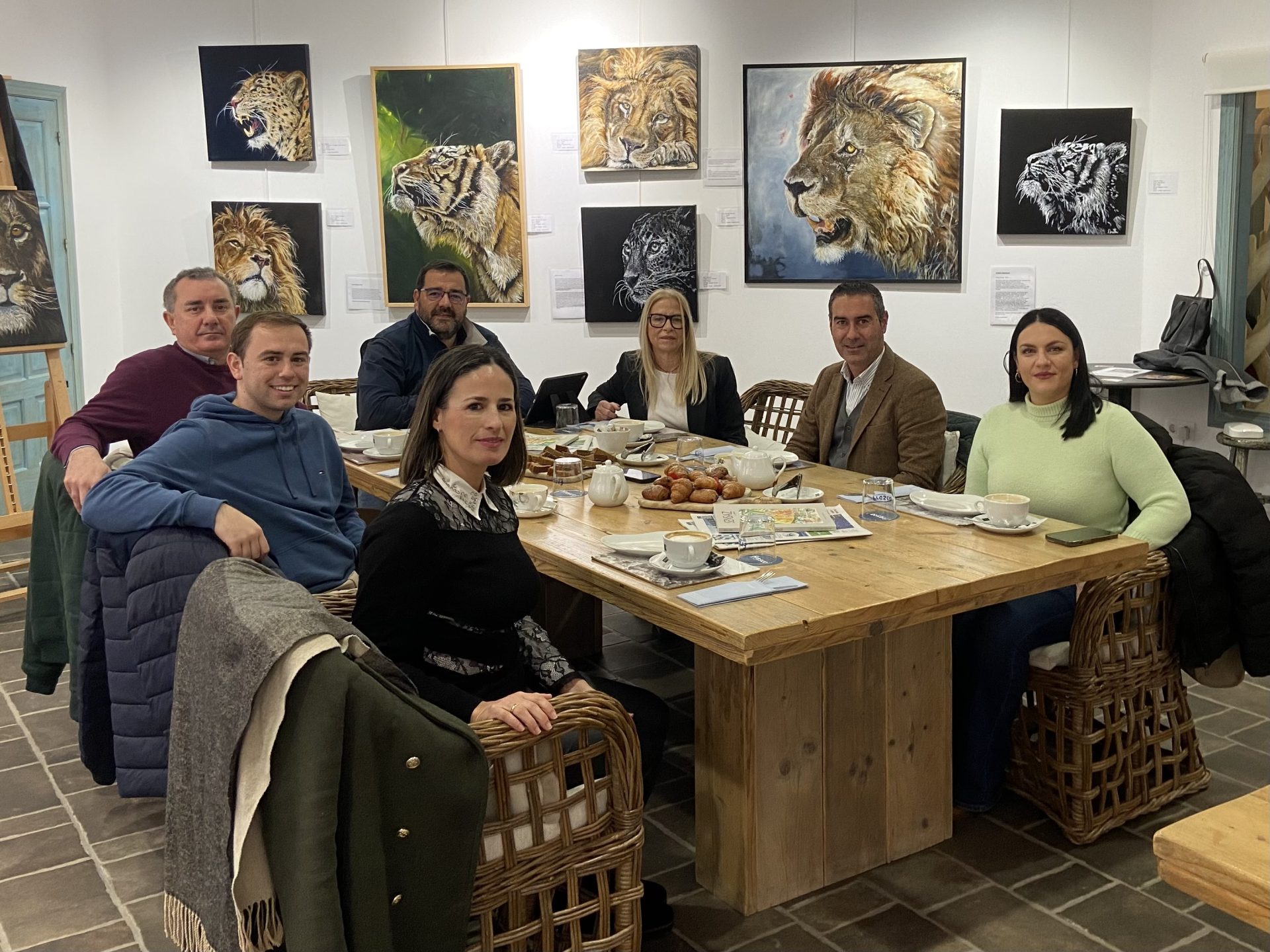
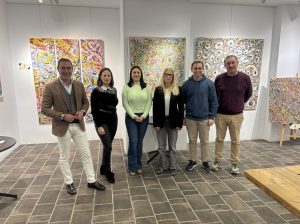 Ese nuevo enfoque fue el eje central del coloquio celebrado en Fresco Marina con responsables técnicos y políticos del ámbito turístico comarcal, en el que participaron Valle Belizón, técnico de Turismo de la Mancomunidad de Municipios del Campo de Gibraltar; Alfonso Valdivia, concejal de Turismo del Ayuntamiento de San Roque junto al técnico de su delegación, Carlos Jordán; además de los concejales de Turismo de Castellar, Marina Saraiba, y Los Barrios, Pablo García.
“Este FITUR va a ser diferente, tal y como nos confirmaron en Diputación hace un mes y medio”, comenzaba Alfonso Valdivia, poniendo palabras a una sensación compartida por todos los componentes de la mesa. Tras décadas con un formato prácticamente inalterable, la Diputación de Cádiz y la Junta de Andalucía han decidido ordenar y concentrar las presentaciones, como nos explicaba Valle Belizón, dejando atrás “el antiguo modelo de intervenciones sucesivas de municipios para apostar por concentrarlos en bloques temáticos, como turismo cultural, naturaleza, lujo, innovación o destinos inteligentes”.
La intención es clara: ganar eficacia, atraer atención mediática y profesionalizar aún más un evento que, pese a su enorme proyección, había caído en cierta rigidez institucional. “Tal y como nos comentaron en Cádiz, era muy complicado dar cabida a más de cuarenta municipios de la provincia con presentaciones clásicas”, explica Belizón. “Lógicamente cada municipio tiene derecho a presentar sus propuestas, pero es cierto que esa sucesión de presentaciones seguidas hace que el evento sea menos atractivo de lo que podría ofrecer”, confirma el otro técnico de la mesa, Carlos Jordán.
El nuevo sistema busca dinamismo, coloquios, expertos y enfoques transversales, aunque también genera incertidumbre entre los destinos, que este año acuden, sin saber con exactitud cómo ni cuándo se articulará su presencia. “Cada municipio ya teníamos preparado la mayor parte del material para este año y ahora tendremos que adaptarnos a esta nueva metodología, pero entiendo que todos tendremos nuestro hueco” confirma Pablo García.
De hecho, el Campo de Gibraltar seguirá manteniendo un espacio propio dentro del pabellón de Andalucía, confirma Valle, que además adelanta que el jueves, antes del inicio oficial de la jornada del Patronato de Turismo de Cádiz, se realizará la foto institucional de los alcaldes de la comarca y una presentación conjunta como destino turístico inteligente “que es la apuesta común a la que todos los municipios se han sumado en este año”.
Más allá de los formatos, nuestros invitados dejaron clara una idea: FITUR sigue siendo un punto de encuentro insustituible. “Es donde te ves con todo el mundo”, afirmaba Pablo con el asentimiento del resto de participantes, subrayando el valor de FITUR como espacio para compartir experiencias, detectar tendencias y medir el pulso del turismo mundial.
La comparación con otras ferias del sector como ITB Berlín, World Travel Market de Londres o eventos en Dubái puso sobre la mesa una reflexión clave: el turismo es hoy una industria extremadamente profesionalizada, en la que destinos emergentes, especialmente de Oriente Medio o Asia, están invirtiendo con una ambición enorme. “Tienen hambre por posicionarse, por captar al turismo de alto poder adquisitivo, innovar y anticiparse al futuro”, señaló Alfonso Valdivia, que nos confirmaba que Sotogrande, con su turismo de lujo, el golf y experiencias exclusivas captaban mucho interés en estos eventos internacionales.
Como destino de alto standing, la propuesta de golf, polo, playa, clima y calidad de vida de San Roque y Sotogrande sigue atrayendo a un viajero global, exigente y con múltiples opciones a su alcance. En este sentido, tanto Alfonso y como Carlos Jordán incidían en la importancia de “aprovechar ese impacto internacional para mostrar también otros atractivos del municipio no tan conocidos por el gran público pero que también hay que tienen su propio potencial turístico”, destacando Carlos el éxito de las visitas guiadas y rutas inclusivas.
Por su parte, Marina Saraiba, nos comentaba las propuestas de Castellar de la Frontera para FITUR 2026. Su apuesta por el turismo inclusivo se materializa en proyectos como la recreación en 3D del castillo, “que permitirá recorrerlo de forma virtual a personas con movilidad reducida” y en nuevas infraestructuras accesibles en el entorno del punto de información turística, con nuevos ‘puntos selfie’ en sus miradores con soportes interactivos dotados de audioguías.
A ello se suma la consolidación de OpenArt, “un evento que abre las puertas del municipio a artesanos y artistas locales para que el público pueda conocer y admirar sus trabajos mientras recorre el Castillo”, convirtiendo Castellar en un escaparate vivo de creatividad, tradición y cultura para visitantes de cualquier edad.
Pero 2026 será, además, un año histórico para Castellar, tal y como nos confirma Marina. El municipio será sede de la Asamblea Internacional de los Pueblos Más Bonitos del Mundo, un acontecimiento de enorme proyección que reunirá en la localidad a representantes de pueblos de 12 países diferentes. Este evento será presentado oficialmente en FITUR, en el stand de Los Pueblos Más Bonitos de España, reforzando la dimensión internacional del municipio.
“Desde que entramos en esta red de municipios, la proyección de nuestro pueblo y sus atractivos ha sido exponencial”, señala la edil de Turismo de Castellar, que ha podido comprobar cómo se ha registrado un aumento significativo en la hostelería local, además de mayor visibilidad mediática y la atracción de proyectos audiovisuales y publicitarios.
Por su parte, Pablo García nos comenta que Los Barrios afronta FITUR desde la diversidad de su oferta. “Con más del 70% de término municipal dentro del Parque Natural Los Alcornocales, la naturaleza es uno de nuestros grandes activos”, señala el concejal barreño. “Por eso hemos actualizado la guía de senderos, para seguir aprovechando el auge de actividades como el senderismo, el cicloturismo o la micología”.
Dentro de esta estrategia también se suma la gastronomía, “con una nueva guía que actualiza la situación del sector tras la pandemia”, además del impulso de nuevas iniciativas de ocio como la marca Montera Forum en la plaza de toros cubierta de la localidad, concebida como espacio polivalente. De estos eventos musicales y de ocio, García destacaba la nueva lpasarela flamenca, que se ha convertido en una referencia comarcal, dando visibilidad a jóvenes diseñadores comarcales.
Dentro de las últimas reflexiones, todos los invitados destacaban la buena sintonía a nivel institucional entre todos los municipios y la Mancomunidad por mostrar los atractivos de la zona, coincidiendo también en el decisivo papel del sector privado.
“El trabajo continuo de comercialización de nuestras empresas ha sido fundamental para atraer visitantes”, explicaba Valle, añadiendo que “ahora también hay que poner el foco en la gestión sostenible de nuestros recursos de forma que no tengamos un turismo masificado y pierda atractivo”.
Esa idea de gestión sostenible, que haga convivir el turismo con el cuidado de los recursos naturales y el bienestar de los ciudadanos, supone el cierre de este interesante coloquio previo a FITUR 2026. Una cita a la que el Campo de Gibraltar llega consciente de que su fortaleza reside tanto en la singularidad de cada municipio como en la capacidad de trabajar juntos para adaptarse a un mercado en constante evolución.
The Campo de Gibraltar prepares for FITUR 2026 with major new developments
The region is approaching a turning point at the world’s leading international tourism fair, with a new presentation model for which the different local councils in the area and the Commonwealth are preparing.
The Campo de Gibraltar will once again be present at FITUR in 2026, and we begin the new year by analysing this important event in our ‘SGplus Meetings’, in an edition where significant changes in the format are expected for the municipalities of the Campo de Gibraltar and the rest of the province. A shift in approach that requires rethinking speeches, formats and strategies in an increasingly competitive and globalised environment.
This new approach was the central theme of the discussion held at Fresco Marina with technical and political representatives from the regional tourism sector, including Valle Belizón, Tourism Technician of the Campo de Gibraltar Commonwealth of Municipalities; Alfonso Valdivia, Tourism Councillor of San Roque Town Hall, together with the technician from his department, Carlos Jordán; as well as the Tourism Councillors of Castellar, Marina Saraiba, and Los Barrios, Pablo García.
“This FITUR is going to be different, as they confirmed to us at the Provincial Council a month and a half ago,” began Alfonso Valdivia, putting into words a sentiment shared by all members of the panel. After decades with a virtually unchanged format, the Provincial Council of Cádiz and the Andalusian Government have decided to organise and concentrate the presentations, as Valle Belizón explained, moving away from “the old model of successive municipal interventions to group them into thematic blocks such as cultural tourism, nature, luxury, innovation or smart destinations.”
The intention is clear: to gain efficiency, attract media attention, and further professionalise an event that, despite its enormous reach, had become somewhat rigid institutionally. “As they told us in Cádiz, it was very complicated to accommodate more than forty municipalities of the province with traditional presentations,” explains Belizón. “Of course, each municipality has the right to present its proposals, but it is true that this succession of consecutive presentations makes the event less attractive than it could be,” confirms Carlos Jordán, the other technician on the panel.
The new system seeks dynamism, discussions, experts, and cross-cutting approaches, though it also generates uncertainty among the destinations, which this year will attend without knowing exactly how or when their presence will be structured. “Each municipality had most of its material prepared for this year, and now we will have to adapt to this new methodology, but I understand that we will all have our space,” confirms Pablo García.
In fact, the Campo de Gibraltar will continue to have its own dedicated space within the Andalusia pavilion, confirms Valle, who also revealed that on Thursday, before the official start of the Cádiz Tourism Board’s session, there will be an institutional photo of the mayors of the region and a joint presentation as a smart tourist destination “which is the common strategy that all the municipalities have joined this year.”
Beyond the formats, our guests made one idea clear: FITUR remains an irreplaceable meeting point. “It’s where you meet everyone,” Pablo said, with the agreement of the other participants, emphasising FITUR’s value as a space to share experiences, spot trends, and gauge the pulse of global tourism.
Comparisons with other industry fairs such as ITB Berlin, the World Travel Market in London, or events in Dubai brought up a key reflection: tourism today is an extremely professionalised industry, where emerging destinations, especially from the Middle East or Asia, are investing with enormous ambition. “They are eager to position themselves, to attract high-end tourists, innovate, and anticipate the future,” said Alfonso Valdivia, confirming that Sotogrande, with its luxury tourism, golf, and exclusive experiences, draws considerable interest at these international events.
As a high-end destination, the golf, polo, beach, climate, and quality-of-life offer of San Roque and Sotogrande continues to attract a global, demanding traveller with multiple options at their disposal. In this regard, both Alfonso and Carlos Jordán emphasised the importance of “leveraging this international impact to also showcase other attractions of the municipality that are not so well known to the general public but also have their own tourism potential,” highlighting the success of guided tours and inclusive routes.
Meanwhile, Marina Saraiba discussed Castellar de la Frontera’s proposals for FITUR 2026. Their focus on inclusive tourism is reflected in projects such as the 3D reconstruction of the castle, “which will allow people with reduced mobility to explore it virtually,” as well as new accessible infrastructures around the tourist information point, with new ‘selfie points’ on viewpoints equipped with interactive audioguides.
Additionally, the consolidation of OpenArt “is an event that opens the town to local artisans and artists so that the public can view and admire their work while exploring the Castle,” turning Castellar into a living showcase of creativity, tradition, and culture for visitors of all ages.
Furthermore, 2026 will be a historic year for Castellar, as Marina confirms. The municipality will host the International Assembly of the Most Beautiful Villages in the World, an event of enormous significance that will bring together representatives from villages in 12 different countries. This event will be officially presented at FITUR, in the stand of The Most Beautiful Villages of Spain, reinforcing the international dimension of the municipality.
“Since joining this network of municipalities, the projection of our town and its attractions has been exponential,” says the Castellar Tourism Councillor, who has observed a significant increase in local hospitality, as well as greater media visibility and the attraction of audiovisual and advertising projects.
Pablo García added that Los Barrios approaches FITUR highlighting the diversity of its offer. “With more than 70% of the municipality within the Los Alcornocales Natural Park, nature is one of our great assets,” the councillor explains. “That’s why we have updated the trail guide to continue taking advantage of the boom in activities such as hiking, cycling, and mycology.”
This strategy is complemented by gastronomy, “with a new guide updating the sector’s status after the pandemic,” as well as the promotion of new leisure initiatives such as the Montera Forum brand in the town’s indoor bullring, conceived as a multipurpose space. Among these musical and leisure events, García highlighted the new flamenco catwalk, which has become a regional reference, giving visibility to young local designers.
In their final reflections, all the guests emphasised the strong institutional coordination among the municipalities and the Commonwealth in showcasing the area’s attractions, while also recognising the decisive role of the private sector.
“The continuous marketing efforts of our businesses have been fundamental in attracting visitors,” explained Valle, adding that “now we also need to focus on the sustainable management of our resources so that tourism does not become overcrowded and lose its appeal.”
This idea of sustainable management, which allows tourism to coexist with the care of natural resources and citizens’ well-being, closes this interesting pre-FITUR 2026 discussion. The Campo de Gibraltar approaches the event aware that its strength lies both in the uniqueness of each municipality and in the ability to work together to adapt to a constantly evolving market.