


OM28 Architects
En Sotogrande, cuando hablamos de arquitectura residencial, pensamos en grandes terrazas, porches, piscinas y jardines. Nuestro clima invita a disfrutar del exterior gran parte del año y muchas de las decisiones de diseño giran en torno a esa relación entre la vivienda y su entorno. Sin embargo, hay otra estación que merece la misma atención: el invierno.
Con la llegada de los meses más fríos cambia nuestra manera de vivir la casa. Las terrazas pierden protagonismo, las reuniones se trasladan al salón y recuperamos el placer de disfrutar de los espacios interiores. Es entonces cuando determinados elementos arquitectónicos, que durante el verano pasan casi inadvertidos, adquieren una especial importancia.
Uno de ellos es, sin duda, la chimenea. Durante muchos años ha constituido uno de los elementos más característicos de las viviendas tradicionales, especialmente en sus salones y zonas de estar. Hoy sigue teniendo un papel destacado, aunque su diseño y su función hayan evolucionado considerablemente.
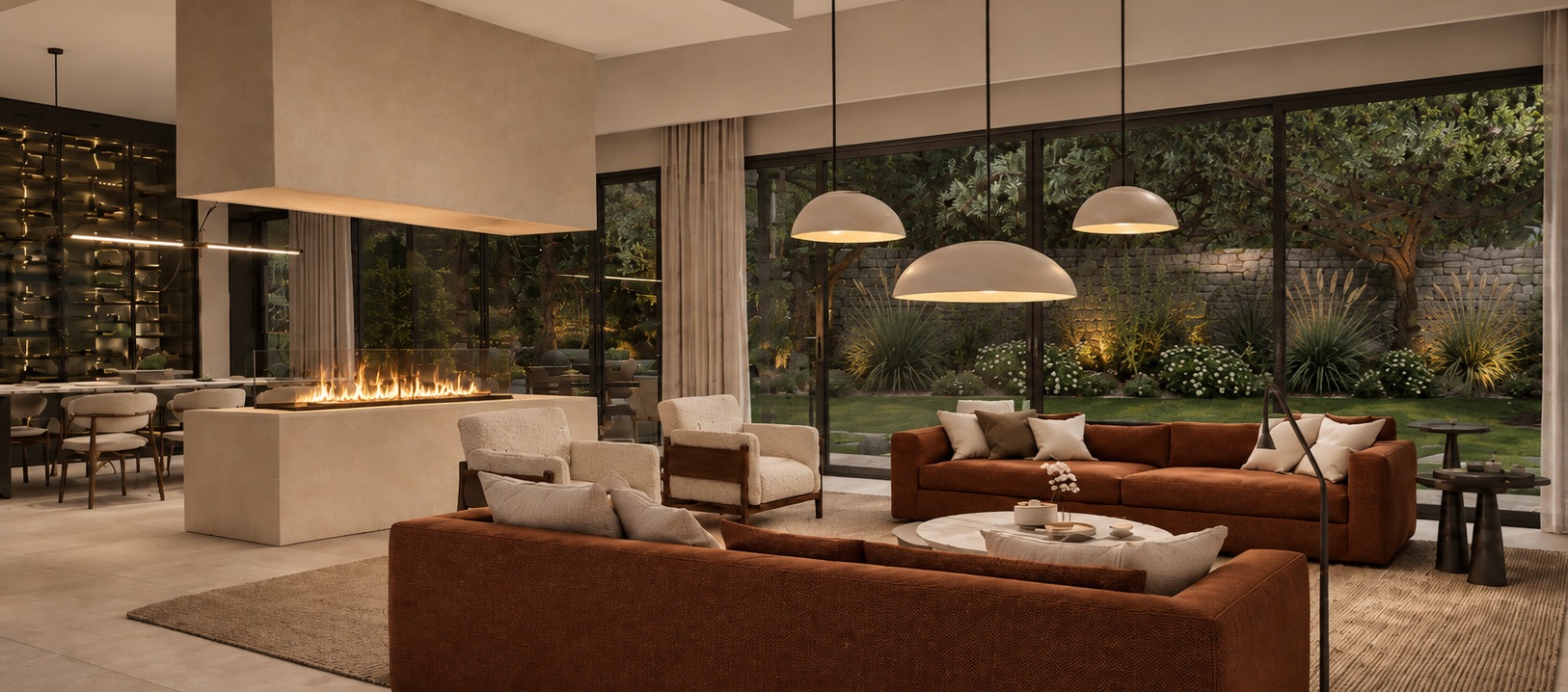
Desde las grandes chimeneas de piedra de las villas clásicas hasta las soluciones contemporáneas, integradas en muros o concebidas como elementos escultóricos, la chimenea continúa siendo un punto de encuentro dentro de la vivienda. Más allá de su capacidad para aportar calor, introduce un componente difícil de sustituir: la presencia del fuego, su movimiento y la atmósfera que genera.
En la arquitectura actual, su incorporación exige estudiar cuidadosamente la ubicación, las proporciones, la ventilación y la relación con el mobiliario. Una chimenea bien situada puede organizar todo un salón, definir diferentes ambientes o establecer una conexión visual entre varias estancias.
Pero proyectar para el invierno supone también prestar atención a otros aspectos. La entrada de luz natural, la orientación de los espacios de estar, o la posibilidad de contemplar el jardín desde el interior contribuyen a crear ambientes especialmente acogedores.
Y, detrás de todo ello debe existir una construcción capaz de garantizar unas condiciones óptimas de confort. Los sistemas de climatización, el aislamiento y las carpinterías de altas prestaciones permiten que las viviendas actuales mantengan temperaturas agradables sin renunciar a los grandes espacios abiertos y acristalados que caracterizan buena parte de la arquitectura de Sotogrande.
Una vivienda bien proyectada debe responder a todas las estaciones, adaptándose a las distintas formas de disfrutarla a lo largo del año.
Porque, aunque Sotogrande sea especialmente conocido por sus veranos, también tiene algo muy especial en invierno: esos días luminosos, las tardes tranquilas y el placer de reunirse alrededor de una chimenea mientras, al otro lado de los ventanales, el jardín sigue formando parte de nuestra casa.
__________________________________________
Designing for winter
In Sotogrande, residential architecture almost always conjures images of expansive terraces, shaded porches, swimming pools, and lush gardens. Our climate invites us to live outdoors for much of the year, and many design decisions naturally revolve around connecting the home to its surrounding landscape. Yet there is another season that deserves just as much architectural forethought: winter.
When the cooler months arrive, the way we inhabit our homes shifts. Terraces take a back seat, gatherings move indoors to the living room, and we rediscover the quiet pleasure of interior spaces. It is during this time of year that certain architectural features—ones that go largely unnoticed through the summer—suddenly take center stage.
Foremost among them is the fireplace. For generations, it has been one of the defining hallmarks of traditional homes, anchoring living rooms and family spaces. Today, it continues to play a starring role, even as its form and function have evolved dramatically.
From the grand stone hearths of classic villas to sleek, contemporary designs—flush-mounted into walls or conceived as freestanding sculptural pieces—the fireplace remains the natural gathering point of the home. Beyond simply radiating warmth, it introduces something nearly impossible to replicate: the living presence of fire, its flicker, and the unmistakable atmosphere it creates.
In modern architecture, integrating a fireplace requires careful consideration of placement, scale, ventilation, and how it interacts with the surrounding furniture. A thoughtfully positioned hearth can anchor an entire living area, subtly zone open-plan layouts, or create a visual thread connecting multiple rooms.
Designing with winter in mind also means paying close attention to the subtler details—maximizing natural light, orienting living areas to capture the low winter sun, and framing views of the garden from inside to foster a deep sense of warmth and shelter.
And behind all of this lies the engineering required to ensure effortless comfort. High-efficiency climate control, superior thermal insulation, and performance glazing allow today’s homes to maintain an ideal indoor temperature without sacrificing the sweeping, glass-walled open spaces that define so much of Sotogrande’s architectural identity.
A truly well-designed home must respond to every season, adapting seamlessly to the changing ways we live in it throughout the year.
Because while Sotogrande may be famous for its summers, winter here holds a quiet magic all its own: crisp, sunlit days, unhurried afternoons, and the simple luxury of gathering around a fire while, just beyond the glass, the garden remains an integral part of home.


