


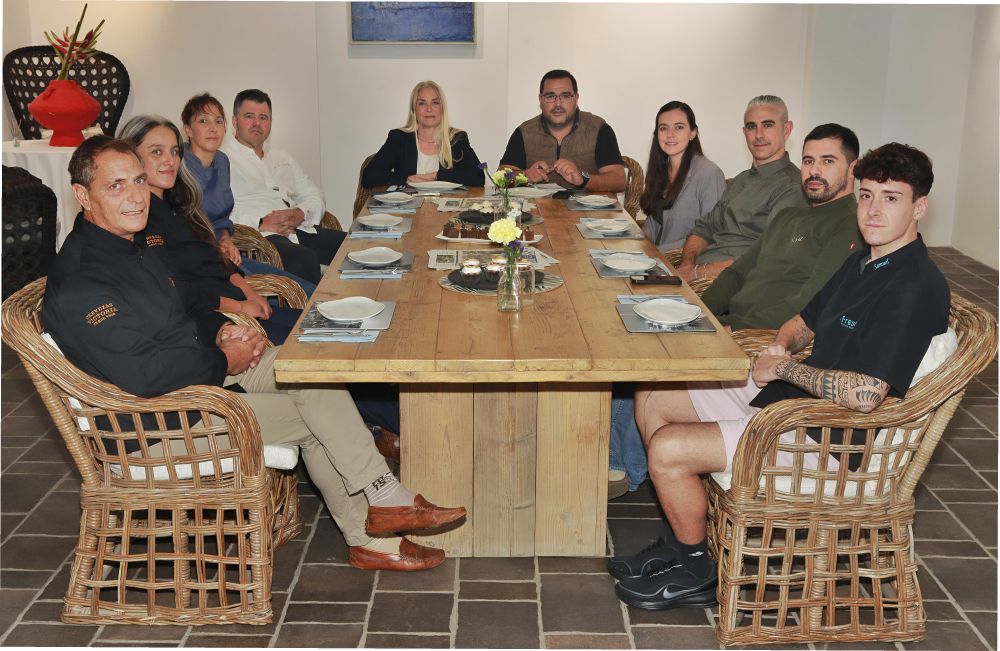
Chefs de la zona analizan la evolución de la cocina de Sotogrande en los últimos años. La variedad de clientes, experiencias y propuestas gastronómicas y las opciones para poder convertirse en uno de los destinos gastronómicos más singulares del sur de Europa
¿A qué sabe Sotogrande? La pregunta parecía sencilla para lanzarla en un Encuentro de SGplus en el que logramos reunir a diferentes chefs que trabajan en la zona. Sin embargo, sus respuestas revelaron una realidad mucho más compleja. Porque Sotogrande sabe a brasas, a atún rojo, a huerta, a cocina internacional y a tradición, a desayunos de hotel y a cenas privadas en villas espectaculares y, por supuesto, a clientes llegados de medio mundo. Pero también sabe a un territorio que, dentro de esa enorme variedad de propuestas y destinatarios, todavía está construyendo su propio relato gastronómico.
Ésta fue una de las principales conclusiones del encuentro organizado por SGplus con algunos de los profesionales que mejor conocen las cocinas de la zona: Samuel Sierra (Fresco Marina), Guillermo Collado (NAAL), Sergio Garbuglia y Daiana Martínez (La Criolla), Leandro Caballero y Lorena Pimentel (SO/ Sotogrande) y José Villalba y Tiphaine Cadou (Cooking for You)
A lo largo de la conversación aparecieron cuestiones tan diversas como la defensa del producto local, la influencia de la cocina internacional, la presión de las redes sociales, la evolución del cliente o la necesidad de colaborar más entre profesionales. Un debate que terminó girando alrededor de una misma idea: cómo mantener la autenticidad en un lugar donde conviven tantas culturas como en pocos rincones del Mediterráneo.
Para Leandro Caballero, la riqueza gastronómica de Sotogrande nace precisamente de esa mezcla de procedencias y sensibilidades. Sin embargo, y desde su defensa de los sabores tradicionales de Andalucía, el chef de Cortijo Santa María considera que existe una tendencia creciente a reproducir directamente conceptos que funcionan en otros lugares sin preguntarse antes si realmente se hace de forma correcta. “Ahora es muy fácil poner sushi, por ejemplo. Se abren muchos negocios que lo ofrecen, pero la gran pregunta es: ¿se hace bien?”.
Su reflexión no es una crítica a la cocina internacional. De hecho, tanto Leandro como el resto de los participantes reconocen que la diversidad gastronómica forma parte de la identidad actual de Sotogrande. El debate surge cuando esa diversidad corre el riesgo de sustituir al producto, a la técnica o al conocimiento.
Daiana Martínez comparte esa preocupación desde la experiencia de La Criolla. Su propuesta gira alrededor de la parrilla y el fuego según la tradición argentina, una especialización que han decidido mantener incluso cuando las tendencias del mercado parecen empujar hacia otros caminos. “Nos gusta hacer bien lo que sabemos hacer. Tenemos un fundamento, que es la leña. Trabajamos con fuego e intentamos que el producto salga de ahí lo menos modificado posible. Vas a pedir una chuleta de vaca y vas a comer una chuleta de vaca”.
En la mesa nadie discute que Sotogrande necesite variedad. La cuestión está en cómo equilibrar esa oferta internacional con una identidad gastronómica reconocible. Guillermo Collado lo resume con naturalidad. “Estamos en un sitio donde tenemos muchas influencias. Si quieres comer sushi puedes comer sushi. Si quieres comer indio puedes comer indio. El cliente debe tener donde elegir, porque nos pueden llegar de cualquier parte del mundo”.
De hecho, la multiculturalidad tanto de la clientela como de las propuestas aparece constantemente en la conversación porque define buena parte del trabajo diario de estos profesionales.
En algunos establecimientos, la inmensa mayoría de los clientes son extranjeros. Belgas, franceses, británicos, holandeses, polacos, italianos o escandinavos forman parte habitual del paisaje gastronómico de la zona, como confirma Daiana. “En La Criolla, el 98 % de los clientes son extranjeros, aunque eso no significa que renuncien a propuestas muy definidas. Quien cruza nuestra puerta buscando una parrilla argentina espera encontrar precisamente eso”.
Otros negocios afrontan un reto diferente. Es el caso de SOciety, el restaurante que dirige Lorena Pimentel dentro de SO/ Sotogrande. Allí la cocina debe responder prácticamente a cualquier momento del día para atender su servicio durante toda la jornada para los clientes del hotel y del campo de golf. “Hemos tenido días de más de 700 clientes. El desayuno termina prácticamente cuando empieza el almuerzo. Luego vienen las piscinas, el room service, las cenas… Empezamos a las seis de la mañana y estamos abiertos hasta las diez y media de la noche”, nos explica.
En ese contexto, continúa Lorena, la adaptación resulta imprescindible. “La carta incorpora influencias internacionales, cocina nikkei, propuestas mexicanas o platos pensados para distintos perfiles de viajeros. No como una moda pasajera, sino como respuesta a una demanda real. Es el cliente el que pide esa variedad”.
Dentro de nuestros invitados, quienes responden a un modelo de negocio más diverso con respecto al resto son José Villalba y Tiphaine Cadou. Su empresa, Cooking for You, lleva la experiencia gastronómica directamente a villas privadas, donde la personalización alcanza niveles imposibles para un restaurante convencional.
“No hay límite”, afirma Cadou al describir las peticiones que reciben. La diferencia es que ellos no esperan al cliente detrás de una carta. Primero conocen qué busca, cómo vive, qué quiere comer y qué tipo de experiencia espera. “Empezamos al revés. ¿Dónde están? ¿Qué material tienen? ¿Qué es lo que quieren? Y a partir de ahí elaboramos una propuesta a medida”.
Esa flexibilidad exige una enorme capacidad de adaptación. Cocinan en espacios diferentes cada día y se enfrentan constantemente a imprevistos logísticos. No obstante, José Villalba destaca que “la finalidad es la misma: que el cliente coma y se vaya alegre. No importa el sitio en el que estemos, al final el objetivo último y principal es ése”, refiriéndose a su actividad como un servicio para el que “en un sitio como Sotogrande sí encuentras demanda”.
Daiana Martínez conoce bien esa realidad porque durante años desarrolló una actividad similar y reconoce, al igual que otros invitados, el enorme mérito de esta propuesta. “Es incluso más difícil que un restaurante. Te puede faltar una sartén, encontrarte una escalera imposible o tener que bajar una parrilla por un ascensor diminuto. Tienes que ser resolutivo porque nunca sabes exactamente lo que te vas a encontrar”.
En cuanto a otras ventajas de la zona, además de su especial microclima, pese a las diferencias de estilo en nuestros invitados, existe un terreno común en el que todos coinciden: la importancia del producto local.
Samuel Sierra, que llegó a Sotogrande después de desarrollarse profesionalmente en La Línea, su tierra natal, reivindica el valor de trabajar cerca del origen. “Si un restaurante no tiene la oportunidad de contar con producto de proximidad es más complicado alcanzar determinadas calidades. No significa que no pueda hacerse bien, pero sí ayuda muchísimo”.
A partir de ahí aparecen ejemplos de todo tipo: quesos de la Sierra de Cádiz, caza procedente de la provincia, tomates de productores cercanos, aceite elaborado por pequeñas familias andaluzas o el atún rojo y el resto de los productos de la costa gaditana.
Por su parte, Guillermo Collado mantiene una defensa firme de la temporalidad. “Intento adaptarme a todo el entorno que tenemos. Si se termina una temporada de un producto, lo saca de la carta. No intento comprar fuera para mantener algo artificialmente”.
No obstante, para Tiphaine Cadou, el valor también está en la manera de trabajar cada ingrediente. “No sólo se trata del cliente o el producto, también es el cocinero y cómo tratas un producto de aquí para hacer que sepa bien a un cliente extranjero”. En este sentido, José Villlalba apuesta también por enseñar esos productos locales a comensales de cualquier parte del mundo. “El cliente que viene de fuera quizá al principio no valore el producto de aquí, pero cuando lo prueba ve la diferencia. Los productos andaluces son de excepción”.
Si en algo coinciden todos los participantes es en que Sotogrande está cambiando. Muchos recuerdan cuando la actividad se concentraba casi exclusivamente en julio y agosto, mientras que el crecimiento del golf, el desarrollo de nuevas urbanizaciones y la llegada continua de residentes están ampliando el calendario.
“Nosotros seguimos trabajando como en verano», señala Guillermo Collado. Mientras que Leandro Caballero reconoce que en sus establecimientos la bajada tradicional apenas se ha percibido. “Para nosotros septiembre ha sido mejor que agosto. Y luego nos llega la temporada del golf”.
Para Sergio Garbuglia, el principal reto es precisamente romper de manera definitiva esa percepción de Sotogrande como destino únicamente para los meses de verano. “Tiene un microclima que no existe en ningún otro lugar de Europa y se merece más tiempo del año”.
Finalmente, la propuesta más interesante de la jornada llegó cuando el encuentro parecía acercarse a su final. Leandro Caballero lanzó una idea que rápidamente encontró eco en la mesa: crear una asociación o una especie de cofradía de cocineros de Sotogrande. No para competir, sino para compartir.
“Tenemos que unirnos. Que hagamos una cofradía de cocineros, que nos juntemos una vez cada cierto tiempo, que veamos nuestras deficiencias y nuestros problemas. Si nosotros nos unimos, Sotogrande va a subir más. Tenemos que defender la palabra Sotogrande”.
La propuesta fue respaldada por varios participantes, convencidos de que la cooperación entre negocios puede beneficiar a todos. Guillermo Collado recordó que otras comarcas gaditanas han conseguido construir una identidad gastronómica fuerte precisamente gracias a la colaboración entre empresas y profesionales.
La conversación terminó ahí, con una idea flotando sobre la mesa. Tal vez porque después de hablar de productos, tendencias, turismo y experiencias, todos parecían coincidir en algo esencial. La gastronomía de Sotogrande ya tiene calidad, talento y diversidad, lo que quizá necesita ahora es aprender a cocinar en equipo entre todos sus protagonistas.
________________________________
The flavours of Sotogrande, between authenticity and global offering
Chefs from the area analyse the evolution of Sotogrande’s cuisine in recent years. The variety of clients, experiences and gastronomic offerings, and the options for it to become one of the most unique culinary destinations in southern Europe.
What does Sotogrande taste of? The question seemed simple enough to launch at an SGplus gathering at which we managed to bring together various chefs working in the area. However, their answers revealed a far more complex reality. Because Sotogrande tastes of embers, of red tuna, of market gardens, of international cuisine and tradition, of hotel breakfasts and private dinners in spectacular villas and, of course, of clients from halfway round the world. But it also tastes of a territory which, within that enormous variety of offerings and audiences, is still building its own gastronomic story.
This was one of the main conclusions of the gathering organised by SGplus with some of the professionals who know the area’s kitchens best: Samuel Sierra (Fresco Marina), Guillermo Collado (NAAL), Sergio Garbuglia and Daiana Martínez (La Criolla), Leandro Caballero and Lorena Pimentel (SO/ Sotogrande) and José Villalba and Tiphaine Cadou (Cooking for You).
Throughout the conversation, questions as diverse as the defence of local produce, the influence of international cuisine, the pressure of social media, the evolution of the client and the need for greater collaboration between professionals all came up. A debate that ended up revolving around one and the same idea: how to maintain authenticity in a place where as many cultures coexist as in few corners of the Mediterranean.
For Leandro Caballero, Sotogrande’s gastronomic richness is born precisely from that mixture of origins and sensibilities. However, and from his defence of Andalusia’s traditional flavours, the chef at Cortijo Santa María believes there is a growing tendency to directly reproduce concepts that work elsewhere without first asking whether they are really being done properly. “Now it’s very easy to put sushi on the menu, for example. Lots of businesses open offering it, but the big question is: is it done well?”
His reflection is not a criticism of international cuisine. In fact, both Leandro and the rest of the participants acknowledge that gastronomic diversity forms part of Sotogrande’s current identity. The debate arises when that diversity runs the risk of replacing the product, the technique or the knowledge.
Daiana Martínez shares that concern from the experience of La Criolla. Her offering revolves around the grill and fire according to Argentine tradition, a specialisation they have decided to maintain even when market trends seem to push towards other paths. “We like to do well what we know how to do. We have a foundation, which is the wood. We work with fire and try to make the product come off it as unmodified as possible. You order a beef chop and you eat a beef chop.”
Around the table nobody disputes that Sotogrande needs variety. The question is how to balance that international offering with a recognisable gastronomic identity. Guillermo Collado sums it up naturally. “We’re in a place where we have many influences. If you want to eat sushi you can eat sushi. If you want to eat Indian you can eat Indian. The client must have somewhere to choose, because people can come to us from anywhere in the world.”
In fact, the multicultural nature of both the clientele and the offerings comes up constantly in the conversation because it defines a good part of these professionals’ daily work.
In some establishments, the vast majority of clients are foreign. Belgians, French, British, Dutch, Poles, Italians and Scandinavians form a regular part of the area’s gastronomic landscape, as Daiana confirms. “At La Criolla, 98% of the clients are foreign, although that doesn’t mean they give up very defined offerings. Whoever walks through our door looking for an Argentine grill expects to find precisely that.”
Other businesses face a different challenge. Such is the case of SOciety, the restaurant run by Lorena Pimentel within SO/ Sotogrande. There the kitchen must respond to practically any time of day in order to serve hotel and golf course clients throughout the whole day. “We’ve had days with more than 700 clients. Breakfast ends practically when lunch begins. Then come the pools, room service, dinners… We start at six in the morning and are open until half past ten at night,” she explains.
In that context, Lorena continues, adaptation is essential. “The menu incorporates international influences, Nikkei cuisine, Mexican offerings or dishes designed for different types of traveller. Not as a passing fad, but as a response to real demand. It’s the client who asks for that variety.”
Among our guests, those who respond to a business model more diverse than the rest are José Villalba and Tiphaine Cadou. Their company, Cooking for You, takes the gastronomic experience directly into private villas, where personalisation reaches levels impossible for a conventional restaurant.
“There’s no limit,” Cadou affirms when describing the requests they receive. The difference is that they don’t wait for the client behind a menu. First they find out what they’re looking for, how they live, what they want to eat and what kind of experience they expect. “We start the other way round. Where are they? What equipment do they have? What do they want? And from there we put together a tailor-made proposal.”
That flexibility demands an enormous capacity for adaptation. They cook in different spaces every day and constantly face logistical unforeseen events. Nevertheless, José Villalba stresses that “the aim is the same: for the client to eat and leave happy. It doesn’t matter where we are, in the end the ultimate and main objective is that”, referring to their activity as a service for which “in a place like Sotogrande you do find demand”.
Daiana Martínez knows that reality well because for years she developed a similar activity and recognises, like other guests, the enormous merit of this proposal. “It’s even more difficult than a restaurant. You might be missing a frying pan, come across an impossible staircase or have to take a grill down a tiny lift. You have to be resourceful because you never know exactly what you’re going to find.”
As for other advantages of the area, besides its special microclimate, despite the differences in style among our guests, there is common ground on which they all agree: the importance of local produce.
Samuel Sierra, who came to Sotogrande after developing his career in La Línea, his home town, champions the value of working close to the source. “If a restaurant doesn’t have the opportunity to count on local produce it’s more complicated to reach certain levels of quality. It doesn’t mean it can’t be done well, but it certainly helps enormously.”
From there, examples of all kinds appear: cheeses from the Sierra de Cádiz, game from the province, tomatoes from nearby growers, oil produced by small Andalusian families or red tuna and the rest of the produce of the Cádiz coast.
For his part, Guillermo Collado firmly defends seasonality. “I try to adapt to the whole environment we have. If a product’s season ends, I take it off the menu. I don’t try to buy elsewhere to maintain something artificially.”
However, for Tiphaine Cadou, the value also lies in the way each ingredient is worked. “It’s not just about the client or the product, it’s also the cook and how you treat a product from here to make it taste good to a foreign client.” In this sense, José Villalba also advocates showing those local products to diners from anywhere in the world. “The client who comes from outside perhaps doesn’t value the local produce at first, but when they try it they see the difference. Andalusian products are exceptional.”
If there is one thing all the participants agree on, it is that Sotogrande is changing. Many remember when activity was concentrated almost exclusively in July and August, while the growth of golf, the development of new residential estates and the continuous arrival of residents are extending the calendar.
“We carry on working as we do in summer,” notes Guillermo Collado. While Leandro Caballero acknowledges that in his establishments the traditional downturn has barely been felt. “For us September has been better than August. And then the golf season arrives.”
For Sergio Garbuglia, the main challenge is precisely to definitively break that perception of Sotogrande as a destination only for the summer months. “It has a microclimate that doesn’t exist anywhere else in Europe and it deserves more of the year.”
Finally, the most interesting proposal of the day came when the gathering seemed to be drawing to a close. Leandro Caballero put forward an idea that quickly found an echo around the table: to create an association or a kind of guild of Sotogrande chefs. Not to compete, but to share.
“We have to unite. Let’s form a guild of cooks, let’s get together every so often, let’s look at our shortcomings and our problems. If we unite, Sotogrande will rise further. We have to defend the word Sotogrande.”
The proposal was backed by several participants, convinced that cooperation between businesses can benefit everyone. Guillermo Collado recalled that other areas of Cádiz have managed to build a strong gastronomic identity precisely thanks to collaboration between companies and professionals.
The conversation ended there, with an idea floating over the table. Perhaps because after talking about products, trends, tourism and experiences, everyone seemed to agree on something essential. Sotogrande’s gastronomy already has quality, talent and diversity; what it perhaps needs now is to learn to cook as a team among all its protagonists.


