




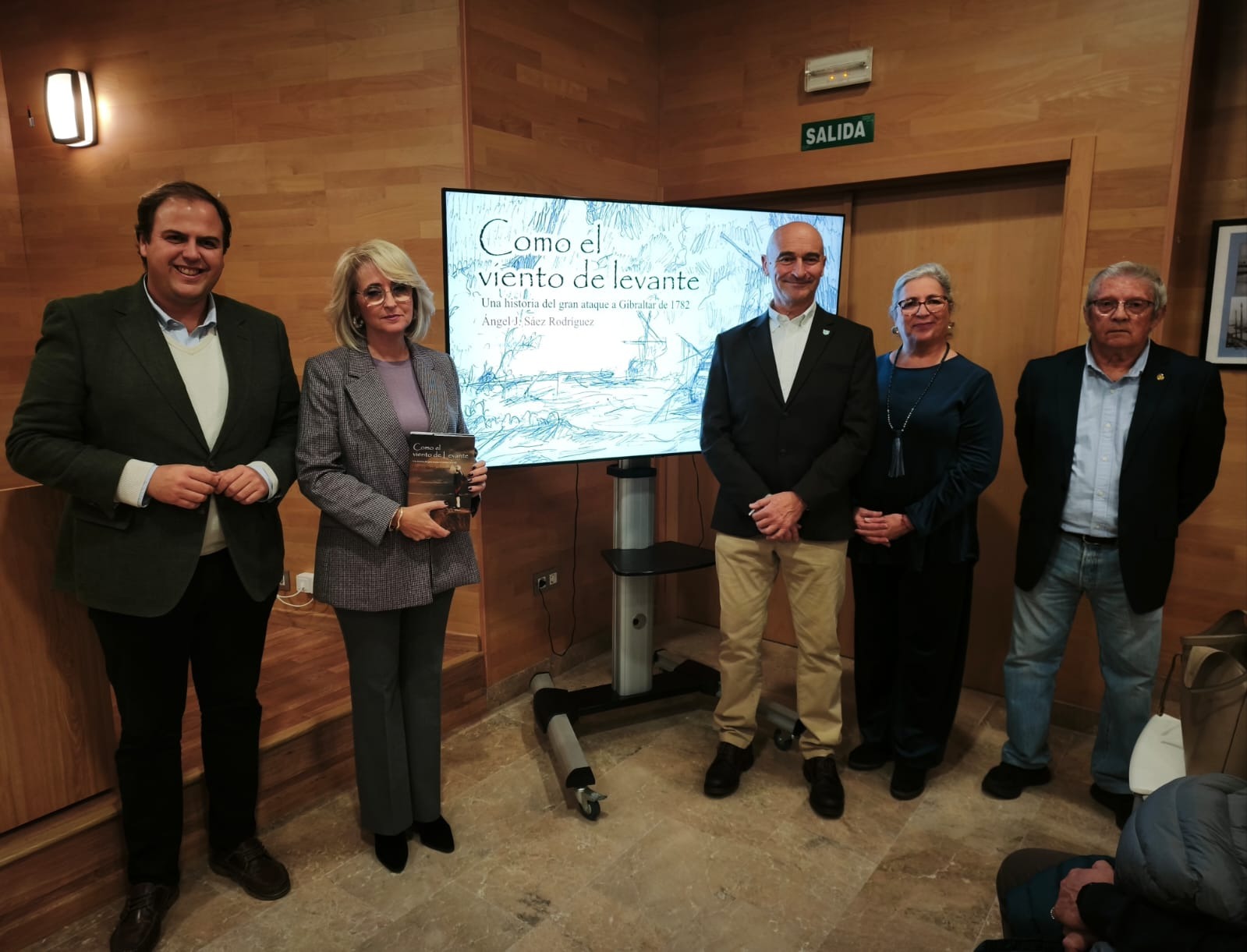
Ángel J. Sáez Rodríguez reedita su obra histórica más celebrada con nuevas aportaciones documentales e ilustraciones inéditas
‘Como el viento de Levante’, la novela histórica de Ángel J. Sáez Rodríguez que se agotó poco después de su publicación en 2008 regresa ahora a las librerías en una edición revisada y ampliada, fruto de la insistente demanda de lectores que durante años buscaron un ejemplar de una obra convertida ya en referencia para los apasionados del siglo XVIII y de la historia comarcal.
La nueva edición se presenta en tapa dura y se enriquece con ilustraciones originales de Óscar Sáez, hermano del autor, que aportan una dimensión visual al relato. No se trata de una simple reimpresión: la obra incorpora nueva documentación de archivo, en buena parte inédita, que permite profundizar en el gran ataque de 1782 durante el tercer asedio a Gibraltar, uno de los episodios bélicos más ambiciosos del reinado de Carlos III.
La novela sitúa este acontecimiento en el contexto de una auténtica “guerra mundial” del siglo XVIII, en la que el Estrecho de Gibraltar desempeñó un papel estratégico clave. Lejos de centrarse únicamente en los grandes nombres, el relato se adentra en la experiencia de los protagonistas silenciosos del asedio: zapadores, ingenieros, tripulaciones de las baterías flotantes y soldados anónimos que sostuvieron el esfuerzo bélico desde la sombra.
Entre hechos históricos contrastados y escenas noveladas, Sáez Rodríguez construye una trama de intriga, camaradería y traición en la que conviven personajes reales, como José Cadalso, Antonio Barceló o el duque de Crillón, con figuras de ficción como Marco Agnelli y su madre, Lucía Agnelli, una mujer influyente y enigmática que articula buena parte del conflicto narrativo.
El lector recorre escenarios hoy profundamente transformados, pero reconocibles: San Roque, Algeciras, la Línea de Contravalación del istmo de Gibraltar, Campamento o la bahía de Algeciras, además de otros enclaves del Mediterráneo occidental como Menorca, Melilla o Manilva. Espacios que sirven de telón de fondo a un relato secuenciado, casi cinematográfico, que combina rigor histórico y pulso narrativo.
‘Como el viento de Levante’ se apoya en décadas de investigación en archivos españoles y extranjeros para recrear un momento decisivo del choque entre imperios, rescatando memorias olvidadas y ofreciendo una mirada distinta sobre un episodio fundamental de la historia del Campo de Gibraltar.
___________________________
The return of ‘Como el viento de Levante’: The definitive novel on the Great Siege of Gibraltar
Ángel J. Sáez Rodríguez reissues his most acclaimed historical work, featuring new archival research and previously unpublished illustrations.
Como el viento de Levante (Like the Levant Wind), the historical novel by Ángel J. Sáez Rodríguez that sold out shortly after its 2008 debut, is finally returning to bookstores. This revised and expanded edition comes in response to years of persistent demand from readers seeking a copy of what has become a benchmark for enthusiasts of 18th-century history and the Gibraltar region.
This new hardback edition is enriched with original illustrations by the author’s brother, Óscar Sáez, which add a striking visual dimension to the narrative. Far from a simple reprint, the volume incorporates fresh archival documentation, much of it never before published, allowing for a deeper exploration of the great assault of 1782 during the Third Great Siege of Gibraltar, one of the most ambitious military campaigns of Charles III’s reign.
Sáez Rodríguez places the action within the context of a true 18th-century «world war,» where the Strait of Gibraltar served as a pivotal strategic theater. Eschewing a sole focus on famous historical figures, the story delves into the experiences of the siege’s «silent protagonists»: the sappers, engineers, crews of the floating batteries, and anonymous soldiers who sustained the war effort from the shadows.
Blending verified historical fact with dramatized scenes, the author weaves a tale of intrigue, camaraderie, and betrayal. Here, historical figures like José Cadalso, Antonio Barceló, and the Duke of Crillon coexist with fictional creations such as Marco Agnelli and his mother, Lucía Agnelli—an influential and enigmatic woman who drives much of the narrative conflict.
The reader is transported across landscapes that, while profoundly transformed today, remain recognizable: San Roque, Algeciras, the Line of Contravalation, Campamento, and the Bay of Algeciras, alongside other Western Mediterranean enclaves like Menorca and Melilla. These settings serve as the backdrop for a cinematic, fast-paced narrative that refuses to sacrifice historical rigor for momentum.
Ultimately, Como el viento de Levante draws on decades of research in both Spanish and international archives to recreate a decisive moment in the clash between empires. It rescues forgotten memories and offers a fresh perspective on a fundamental episode in the history of the Campo de Gibraltar.