

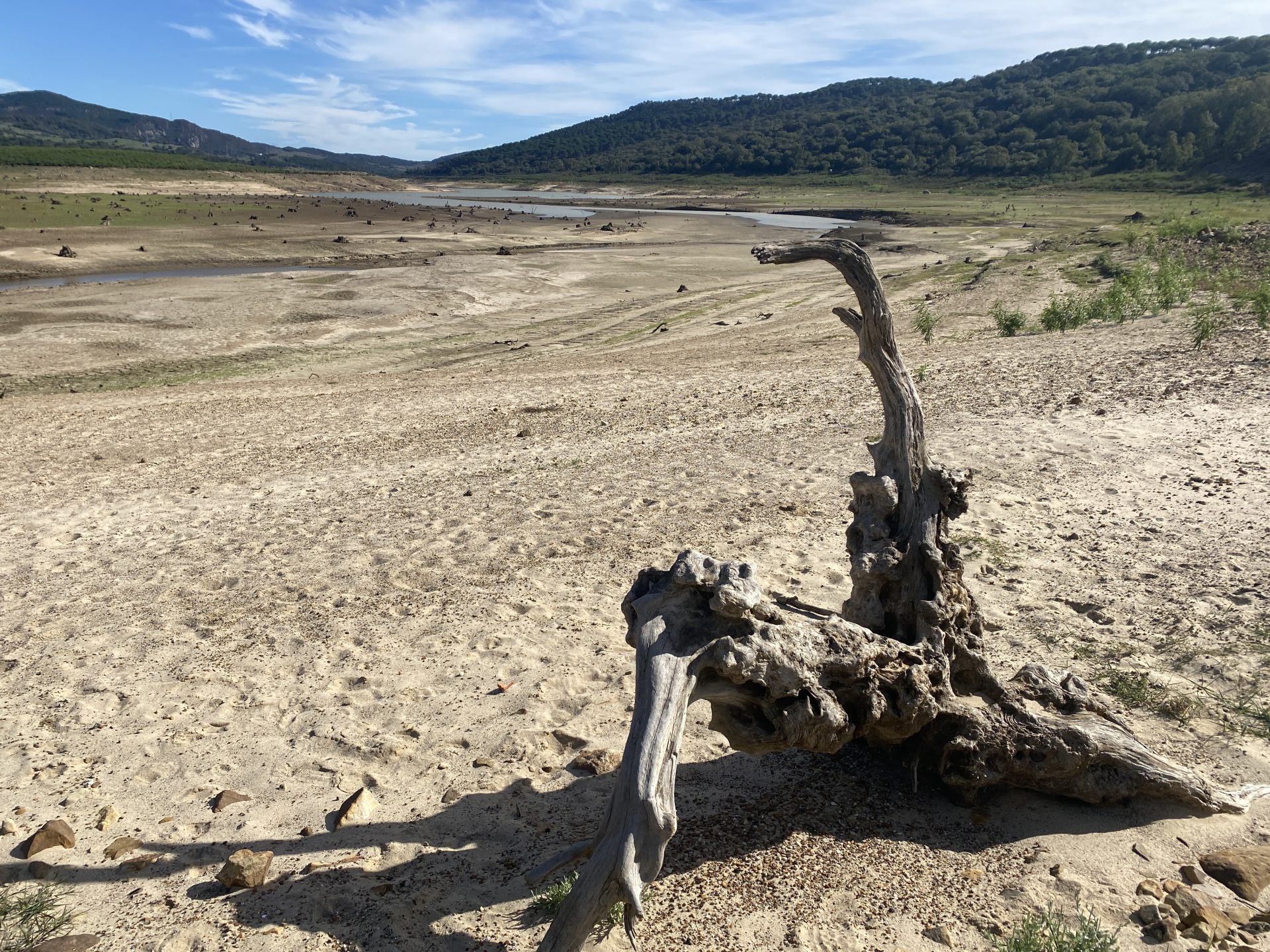
La sequía persistente en el Campo de Gibraltar plantea importantes desafíos. La escasez de lluvias, las reservas de los embalses críticamente bajos y las restricciones en el suministro evidencian la magnitud del problema
En los últimos años, Andalucía se ha venido enfrentando a una situación hidrológica preocupante, especialmente en la provincia de Cádiz, donde la escasez de lluvias desde 2018 ha generado una disminución sustancial en las aportaciones a los embalses de la zona. Esta problemática, agravada por la sequía actual, ha llevado a una reducción significativa de las reservas de agua almacenadas en los embalses de las demarcaciones hidrográficas intracomunitarias de Andalucía.
Las autoridades andaluzas ya dieron un paso al frente en el ámbito normativo. Tanto el actual decreto de sequía como la normativa autonómica desempeñan un papel crucial al establecer limitaciones y orientar la administración equitativa de los recursos hídricos. Sin embargo, estas medidas son apenas el principio de una total reestructuración. La Comunidad Autónoma está avanzando con la implementación de nuevas infraestructuras, destinadas a fortalecer los cimientos de un suministro de agua más robusto durante períodos de sequía excepcional.
En el Campo de Gibraltar nos encontramos en el peor de los escenarios posibles. El embalse de Charco Redondo tiene acumulados 13.60 hm3 y el embalse de Guadarranque 24.18 hm3, cifras muy por debajo del punto crítico establecido por la Mesa de la sequía en 41.5 hm3. Esta dramática realidad no solo trae consigo un escenario de paisajes acuáticos en declive, sino también preocupaciones tangibles sobre el abastecimiento humano y la sostenibilidad de sectores clave como la industria y la agricultura. La urgencia de la situación ha conllevado a tomar medidas urgentes como la prohibición de riego de jardines y zonas verdes, tanto públicas como privadas, limpieza de viales, fuentes ornamentales, duchas y surtidores públicos, piscinas privadas o lavados de vehículos fuera de establecimientos autorizados.
Enfrentamos, sin duda, una sequía más desafiante que la experimentada entre 1992 y 1995. Aunque es alentador notar que las medidas actuales, junto con una planificación más avanzada y un enfoque diferente hacia el consumo, marcan una diferencia significativa. En el año 1995, ya en marzo, se impusieron restricciones tanto a la población como a la industria. En contraste, en la actualidad, llevamos soportando cinco años con niveles de embalses persistentemente inferiores, lo que refleja la magnitud y la prolongación de la situación actual. Este hecho reafirma la necesidad urgente de estrategias más sólidas y sostenibles para afrontar esta sequía, destacando la importancia de la innovación y la colaboración para superar los desafíos del presente y del futuro.
Otro punto importante es el desarrollo de sistemas de tratamiento y reutilización de aguas residuales para usos no potables, como riego o procesos industriales. En este sentido podemos presumir de innovadores sistemas en todos los campos de golf de Sotogrande, que han actualizado sus instalaciones con tecnología de vanguardia para maximizar la eficiencia del agua. Destaca la construcción del lago de Valderrama, el cual permite que el campo se autoabastezca, utilizando las aguas de riego y las precipitaciones. Hay otros proyectos que están en construcción, incluyendo nuevas depuradoras en San Roque y Algeciras-La Línea, que proporcionarán aguas regeneradas tanto para uso industrial como para el riego de campos de golf. Por su parte, la presa de Gibralmedina se presenta como una infraestructura vital que modela el futuro del suministro de agua en la comarca. Este es un compromiso serio con la sostenibilidad hídrica, donde la ingeniería y la responsabilidad ambiental se fusionan para esculpir un panorama resiliente y prometedor.
Comprender la magnitud del problema es clave para tratar de solucionarlo, y es que más allá de las restricciones a la industria, a la agricultura o al sector turístico, solo un uso responsable por parte de todos marcará la diferencia entre la crisis y la solución.
Medidas urgentes
Reducción de la presión en horario diurno (de 6:00 a 23:00)
Bajada drástica de la presión en horario nocturno (de 23:00 a 6:00)
Prohibición de riego de jardines y zonas verdes, tanto públicas como privadas, limpieza de viales, fuentes ornamentales, duchas y surtidores públicos, piscinas privadas o lavados de vehículos fuera de establecimientos autorizados.
_______________________________________
Campo de Gibraltar’s water issue: Prolonged drought calls for urgent action and innovative solutions
The persistent drought in Campo de Gibraltar poses significant challenges. Low rainfall, critically low reservoir levels and supply constraints highlight the magnitude of the problem.
In recent years, Andalusia has been facing a worrying hydrological situation, especially in the province of Cadiz, where the scarcity of rainfall observed as of 2018 has led to a substantial decrease in the contributions to the area’s reservoirs. This problem, aggravated by the current drought, has led to a significant reduction in the water reserves stored in the reservoirs of Andalusia’s intra-community river basin districts.
The Andalusian authorities have already taken a regulatory step forward. Both the current drought decree and the regional regulations play a crucial role in setting limitations and guiding the equitable management of water resources. However, these measures are only the beginning of a comprehensive reorganisation. The Autonomous Community is moving forward with the implementation of new infrastructures, aimed at strengthening the foundations of a more robust water supply during exceptional drought periods.
Here at Campo de Gibraltar, we find ourselves in a worst-case scenario. The Charco Redondo reservoir has accumulated 13.60 hm3 and the Guadarranque reservoir is at 24.18 hm3, figures well below the critical point established by the Drought Committee of 41.5 hm3. This dramatic reality not only brings with it a scenario of dwindling waterscapes, but also tangible concerns about human supply and the sustainability of key sectors such as industry and agriculture. The urgency of the situation has led to the adoption of urgent measures such as the prohibition of irrigation of gardens and green areas, both public and private, cleaning of roads, ornamental fountains, public showers and fountains, private swimming pools and vehicle washing outside authorised establishments.
We are undoubtedly facing a more challenging drought than the one experienced between 1992 and 1995. But it is encouraging to note that current efforts, together with more advanced planning and a different approach to consumption, make a significant difference. In 1995, as late as March, restrictions were imposed on both the population and industry. In contrast, we have now endured five years of persistently lower reservoir levels, reflecting the magnitude and prolongation of the current situation. This fact reaffirms the urgent need for more robust and sustainable strategies to address this drought, highlighting the importance of innovation and collaboration to overcome the present and future challenges.
Another important aspect is the development of wastewater treatment and reuse systems for non-drinking uses, such as irrigation or industrial processes. In this sense we can boast of innovative systems in all the Sotogrande golf courses, which have updated their facilities with cutting-edge technology to maximise water efficiency. Of particular note is the construction of the Valderrama lake, which allows the course to be self-sufficient, using irrigation water and rainfall. Other projects are under construction, including new treatment plants in San Roque and Algeciras-La Línea, which will provide treated water for both industrial use and golf course irrigation. Meanwhile, the Gibralmedina dam is regarded as a vital infrastructure that will shape the future of the region’s water supply. This is a serious commitment to water sustainability, where engineering and environmental responsibility merge to carve a resilient and promising outlook.
Understanding the magnitude of the problem is the key to addressing it, and beyond restrictions on industry, agriculture, or the tourism sector, it is only the responsible use of water by all of us that marks the difference between a crisis and a solution.
Urgent measures
Pressure reduction during the day (from 6pm to 11pm)
Drastic reduction in pressure at night (from 23pm to 6am).
A ban on watering gardens and green areas, both public and private, cleaning roads, ornamental fountains, public showers and fountains, private swimming pools or washing vehicles outside authorised establishments.