




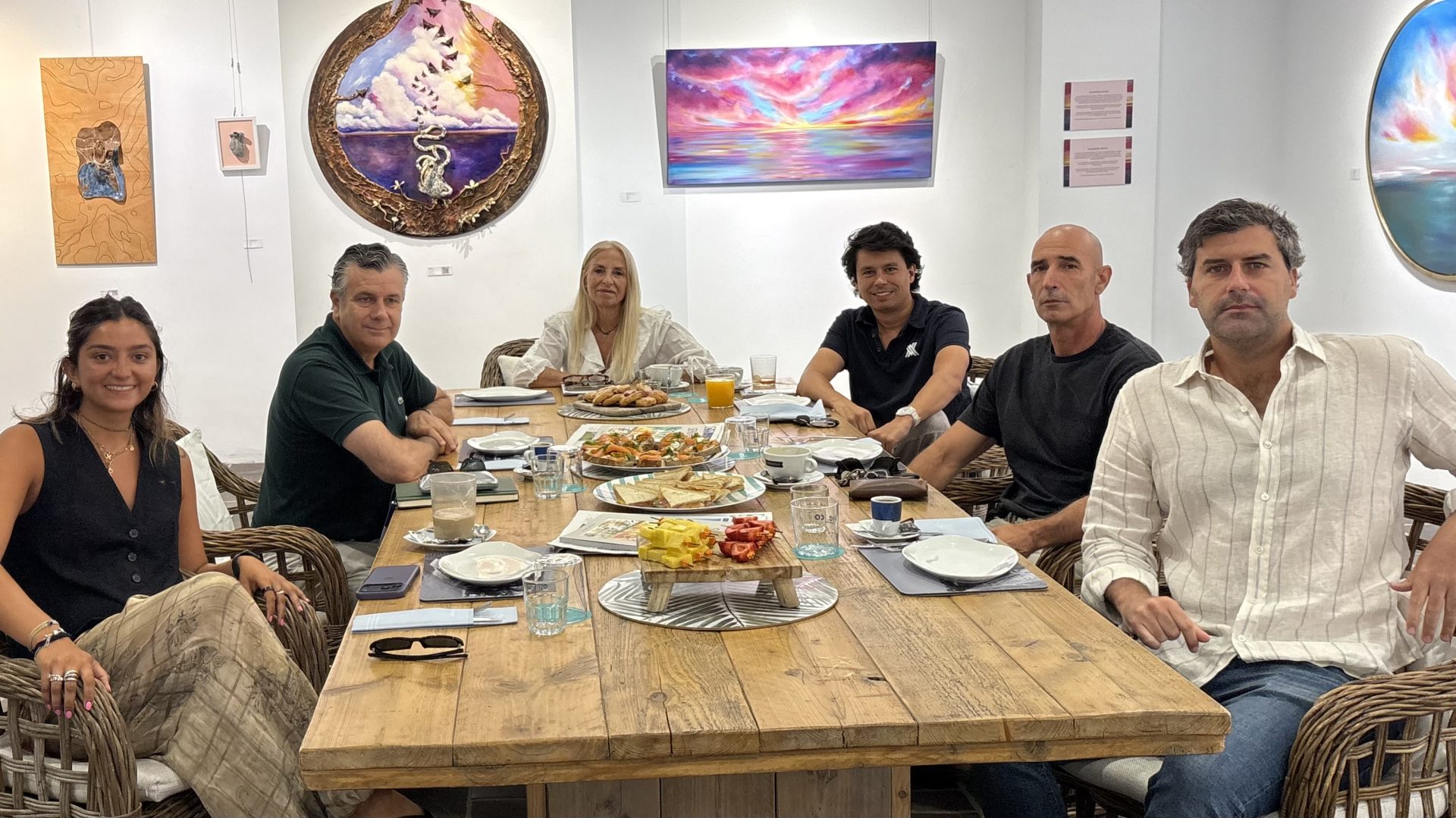
Cinco protagonistas de la temporada oficial de polo explican el esfuerzo, la planificación y los cientos de detalles que hacen posible que cada verano Sotogrande sea el epicentro mundial de este deporte
El polo forma parte del ADN de Sotogrande. Cada verano, los campos de juego se convierten en un punto de encuentro donde deporte, tradición, relaciones sociales y experiencias únicas se mezclan en un escenario que trasciende la propia competición.
Pero detrás de cada partido, de cada final y de cada tarde de polo hay una compleja maquinaria que pocas veces llega al espectador. Una organización que implica deporte, logística, comunicación, hospitality, patrocinadores, equipos internacionales y cientos de pequeños detalles que deben funcionar a la perfección.
Para conocer esa realidad, desde SGplus reunimos en un nuevo Encuentro en la sala de exposiciones de Fresco Marina a algunos de los protagonistas que hacen posible la temporada oficial de polo en Sotogrande: Antonio Alés, CEO de Ayala Polo Club; Álvaro Castillejo, responsable de Marketing y Relaciones Públicas de Ayala; David Bizcocho, director de operaciones de Minuto 7; Renata Puentes, responsable de eventos y hospitality de Minuto 7; y Andrés Ugarte, periodista y locutor de los partidos de la temporada oficial.
La charla comienza recordando cómo desde 2021 Ayala asumió la organización del Torneo Internacional con un objetivo claro: recuperar el impulso de una competición histórica. “Ayala se hace cargo de la organización de un torneo con más de 50 ediciones, con una historia y una trayectoria anterior muy importante”, explica Antonio Alés. “Se percibía un cierto decaimiento con respecto a lo que era el torneo y se consideró que era necesario darle una renovación, un empuje nuevo”.
“Seis años después podemos decir que el torneo está más vivo que nunca. Este año por ejemplo el número de equipos en el Alto Hándicap ha sido absolutamente de primer orden y creo que está en el lugar que le corresponde a su prestigio internacional”, añade Antonio.
Pero atraer a los mejores jugadores y organizaciones del mundo no es fruto de la casualidad. Como explica Andrés Ugarte, la clave está en ofrecer una experiencia completa: “No solamente es estar detrás de los equipos, sino ofrecerles estándares altos dentro y fuera de la cancha”. Un aspecto que ha convertido a Sotogrande en un destino reconocido dentro del circuito internacional.
Pero el polo es mucho más que el deporte. Jugadores y patrones también necesitan encontrar un entorno que facilite su estancia, y para ello la capacidad de Ayala para acoger caballos, equipos y familias, junto con las posibilidades de Sotogrande como destino, son elementos diferenciales. “Aquí encontramos una peculiaridad con respecto a otros torneos del mundo, y es que en tres o cuatro kilómetros lo tienes todo. A nivel familiar y de entretenimiento, Sotogrande en verano es imbatible”, explica David Bizcocho.
Precisamente esa combinación entre deporte y experiencia es una de las grandes apuestas de futuro. La alianza entre Ayala Polo Club y Minuto 7 ha permitido unir dos conocimientos complementarios: la historia y estructura de Ayala con la red internacional y la experiencia deportiva de Minuto 7. “No hay ninguna diferencia entre Minuto 7 y Ayala cuando estamos trabajando juntos. Somos uno”, resume Bizcocho. “Cuando viene alguien y pregunta y quiere soluciones, pues se las damos. Si un patrón necesita una casa, restaurantes o cualquier cosa, intentamos ayudarle. Al final es un trabajo de equipo”.
El polo internacional tiene además una característica singular: aunque la competición es el eje central, el evento trasciende el propio terreno de juego. En palabras de Álvaro Castillejo, “el polo es un nicho muy pequeñito”, lo que hace que la captación de patrocinadores sea un trabajo de largo recorrido. “Es complejo vender un patrocinio de polo y explicar por qué venir aquí, pero cuando vienen y lo ven, se quedan completamente asombrados. No les entra en la cabeza la magnitud de lo que es todo esto”.
Una magnitud que todavía tiene mucho margen de crecimiento. “Estamos en un 25% de lo que podemos ser”, apunta Bizcocho, refiriéndose al potencial global del proyecto. “No solo hablamos de patrocinio, hablamos de líneas de negocio dentro del club. Tenemos cuatro canchas y muchísimos espacios que todavía tienen muchísimo crecimiento”.
Ese crecimiento pasa también por consolidar el polo como un punto de encuentro abierto a todos los públicos. Porque una de las grandes reflexiones del encuentro es que el polo en Sotogrande no pertenece únicamente a quienes conocen el deporte. Es parte de la vida del municipio. “Es el único deporte que creo que el 80% de las personas lo ven de espaldas”, comenta Álvaro Castillejo con humor pero resumiendo una realidad, la cantidad de público que acude al polo por el ambiente. “Mucha gente viene a ver a sus amistades y a hablar, con el polo de fondo”, explica Bizcocho. “Es un fenómeno social”.
A esta circunstancia se suma la intención de seguir rompiendo esa barrera imaginaria de exclusividad, acercando todavía más este deporte a nuevos públicos. “Hay gente que tiene un pensamiento limitado de Sotogrande”, reconoce Bizcocho. “Pero el polo está abierto, es gratuito, y en el momento que la gente lo toca, vuelve todo el tiempo”.
La conversación continúa sobre la enorme suma de factores muy diferentes que supone la organización de una temporada internacional de este deporte. Un enorme reto que implica coordinar jugadores, caballos, patrocinadores, espacios comerciales, medios de comunicación, equipos de hospitality y público. “Cada uno va a su libro y coordinar eso es lo difícil”, explica Bizcocho. “Pero nosotros vamos al deportivo, que funcione, porque esa es nuestra base”.
Los jugadores, además, llegan con una mentalidad completamente competitiva. Lejos de la imagen de una cita meramente social, los mejores jugadores del mundo vienen a ganar. “No les da lo mismo. Después del primer partido ya están hablando con los árbitros, con el equipo de canchas, preguntando cómo ha ido todo”, cuenta Ugarte. “Los mejores vienen y quieren volver, pero vienen a ganar”.
Y mientras los jugadores compiten en el campo, fuera de él comienza otra competición silenciosa: conseguir que todo funcione. Hospitality, eventos y atención al invitado son parte esencial del espectáculo. Renata Puentes conoce bien esa responsabilidad. “En temporada alta es más la parte VIP y toda esa parte del hospitality, que es complicado”, explica.
Su trabajo consiste en conseguir que cada persona que llega viva una experiencia especial, independientemente de quién sea. “El valor nuestro no es lo que tienes, sino lo que eres”, resume Bizcocho. Una filosofía que, según los participantes, define la forma de trabajar del equipo.
Porque si hay una palabra que se repite durante todo el encuentro es equipo. La capacidad de confiar en el trabajo del otro, aceptar críticas y mejorar continuamente es, para ellos, una de las claves del éxito. “Cuando un equipo llega a eso es buenísimo”, señala Ugarte. “Hay una franqueza y una honestidad de decirle al otro las cosas sabiendo que es por el bien del escudo”.
Un escudo que representa mucho más que un torneo deportivo. Representa una parte de la historia de Sotogrande y un legado que sus responsables quieren seguir construyendo. Porque después de una tarde de polo perfecta, el espectador sólo ve el resultado final, pero detrás hay cientos de personas trabajando para que esa magia ocurra. Ése es el polo que no se ve, pero que convierte a Sotogrande, cada verano, en uno de los grandes escenarios internacionales de este deporte.
_______________________________________
Behind the scenes of Polo: the work that makes Sotogrande a global benchmark
Five key figures from the official polo season break down the effort, planning, and hundreds of finer details that transform Sotogrande into the global epicenter of the sport every summer
Polo is woven into the very DNA of Sotogrande. Each summer, the playing fields become a premier gathering point where sport, tradition, social networking, and unique experiences merge in a setting that transcends the competition itself.
Yet, behind every match, every final, and every afternoon of polo lies a complex machine that spectators rarely see. It is an organizational feat involving sports management, logistics, communication, hospitality, sponsors, international teams, and hundreds of moving parts that must operate in perfect harmony.
To uncover this reality, SGplus hosted a new panel discussion at the Fresco Marina exhibition hall, bringing together some of the key figures who make Sotogrande’s official polo season possible: Antonio Alés, CEO of Ayala Polo Club; Álvaro Castillejo, Head of Marketing and Public Relations at Ayala; David Bizcocho, Operations Director at Minuto 7; Renata Puentes, Head of Events and Hospitality at Minuto 7; and Andrés Ugarte, journalist and official match commentator for the season.
The discussion kicked off by revisiting how, in 2021, Ayala took over the organization of the International Tournament with a clear objective: to revitalize a historic competition. «Ayala took the reins of a tournament with over 50 editions under its belt, carrying an incredibly significant history and legacy,» Antonio Alés explained. «There was a perceived stagnation compared to what the tournament once was, and it was clear that it needed a refresh—a new lease on life.»
«Six years later, we can confidently say the tournament is more vibrant than ever. This year, for instance, the lineup of teams in the High Handicap category has been absolutely world-class, and I believe the event has reclaimed the status its international prestige deserves,» Antonio added.
However, drawing the world’s best players and organizations is no coincidence. As Andrés Ugarte pointed out, the key lies in offering an all-encompassing experience: «It’s not just about supporting the teams, but about providing premium standards both on and off the field.» This approach has cemented Sotogrande’s reputation as a premier destination on the international circuit.
Yet polo is about much more than just the sport. Players and patrons also need an environment that accommodates their stay. To that end, Ayala’s capacity to host horses, teams, and families, combined with Sotogrande’s appeal as a destination, serve as key differentiators. «We possess a unique advantage compared to other tournaments around the world: everything you need is within a three to four-kilometer radius. When it comes to family life and entertainment, Sotogrande in the summer is unbeatable,» David Bizcocho explains.
Precisely that fusion of sport and lifestyle experience represents one of the major bets for the future. The alliance between Ayala Polo Club and Minuto 7 has allowed them to merge two complementary areas of expertise: Ayala’s history and infrastructure with Minuto 7’s international network and sports management experience. «There is no division between Minuto 7 and Ayala when we work together. We are one,» Bizcocho sums up. «When someone comes to us looking for solutions, we deliver. If a patron needs a house, restaurant recommendations, or anything else, we step in to help. At the end of the day, it’s a team effort.»
International polo also boasts a singular characteristic: while competition remains the central pillar, the event transcends the boundaries of the field itself. In the words of Álvaro Castillejo, «polo is a very small niche,» which makes securing sponsorships a long-term endeavor. «Selling a polo sponsorship and explaining why brands should come here is complex. But once they actually visit and see it for themselves, they are completely blown away. They can’t quite grasp the sheer magnitude of it all until they are here.»
It is a magnitude that still has plenty of room to grow. «We are only at 25% of what we could be,» notes Bizcocho, referring to the project’s global potential. «We aren’t just talking about sponsorships; we are talking about business lines within the club. We have four grounds and vast spaces that still offer immense growth potential.»
That growth also relies on cementing polo as a gathering point open to the general public. One of the major takeaways from the panel was that polo in Sotogrande does not belong exclusively to those who know the sport; it is an intrinsic part of the local community’s lifestyle. «It’s the only sport I know where 80% of the crowd watches it with their backs turned,» Álvaro Castillejo remarks humorously, capturing the reality of the crowds drawn in by the social atmosphere. «A lot of people come to see friends and chat, with the polo running in the background,» Bizcocho explains. «It’s a social phenomenon.»
Compounding this is the deliberate push to continue breaking down the imaginary barrier of exclusivity, bringing the sport even closer to new audiences. «Some people have a narrow perception of Sotogrande,» Bizcocho admits. «But polo here is open and free to attend. The moment people get a taste of it, they keep coming back.»
The conversation winds down by addressing the massive combination of distinct moving parts required to organize an international season for this sport—a monumental challenge that involves coordinating players, horses, sponsors, commercial spaces, media outlets, hospitality teams, and spectators. «Everyone has their own agenda, and coordinating that is the real challenge,» Bizcocho concludes. «But we focus on the sporting side, making sure it runs smoothly, because that is our foundation.»
Moreover, the players arrive with a fiercely competitive mindset. Far from the image of a merely social gathering, the world’s top players come here to win. «They are deeply invested. Right after the first match, they are already talking to the umpires, checking in with the grounds team, asking how everything went,» Ugarte notes. «The best players come here, and they want to return, but they come to win.»
And while the players battle it out on the field, a silent competition begins off it: ensuring everything runs flawlessly. Hospitality, events, and guest relations are an essential part of the spectacle. Renata Puentes knows this responsibility all too well. «During peak season, it’s mostly about the VIP side and the entire hospitality operation, which gets complicated,» she explains.
Her job is to ensure that every arriving guest enjoys a special experience, regardless of who they are. «Our value lies not in what you have, but in who you are,» Bizcocho sums up—a philosophy that, according to the panelists, defines the team’s work ethic.
If there is one word repeated throughout the entire discussion, it is team. For them, the ability to trust one another’s work, accept criticism, and continuously improve is one of the definitive keys to success. «When a team reaches that level, it’s wonderful,» Ugarte points out. «There is a directness and honesty to tell each other things, knowing it’s for the good of the crest.»
It is a crest that represents far more than just a sporting tournament. It represents a piece of Sotogrande’s history and a legacy that its leaders want to keep building. Because after a perfect afternoon of polo, the spectator only sees the final score; yet behind it are hundreds of people working to make that magic happen. That is the polo you don’t see, but the one that transforms Sotogrande, every summer, into one of the great international stages for the sport.