




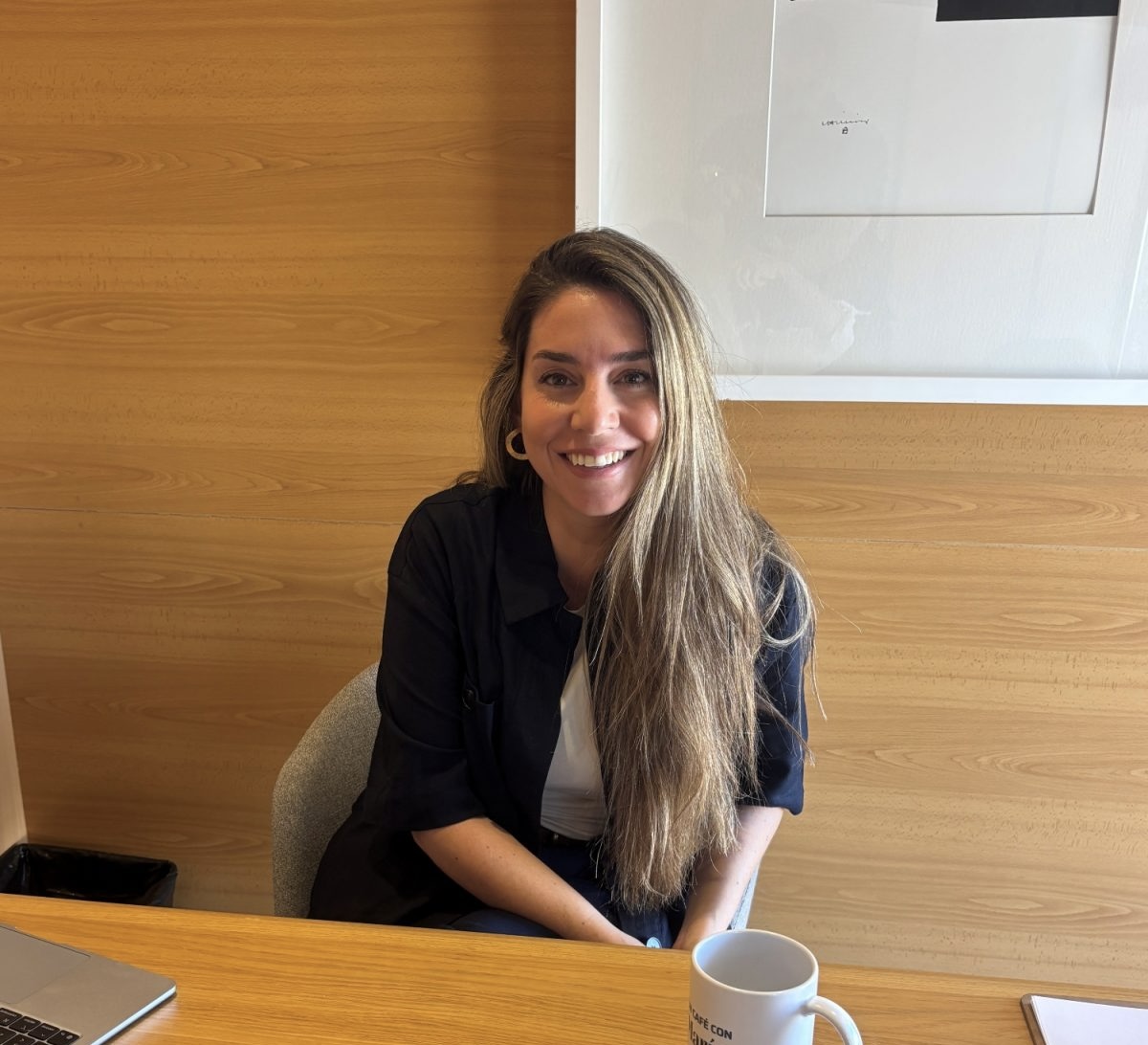
La psicóloga María Sancho recibe a SGplus tras lograr una prestigiosa Beca Marie Curie para su investigación sobre la adolescencia, una pasión nacida de su propia historia
Hay destinos profesionales que empiezan mucho antes de elegir una carrera. El de María Sancho nació en su propia adolescencia, en una etapa que hoy centra precisamente su propia investigación. Tal y como nos cuenta en este Café que tomamos con ella en su clínica, con sólo 15 años una psicóloga le ayudó a entender lo que estaba viviendo a esa edad, marcando además una vocación que ha mantenido hasta hoy: comprender la mente humana para ayudar a las personas.
“Yo tuve una adolescencia bastante rebelde, pero fui a una psicóloga que me ayudó mucho. A mí me cambió la vida”, recuerda. “Ella me ayudó tanto, que no creo que hubiera llegado a donde estoy ahora sin esa ayuda en aquel momento. Por eso, a pesar de tener sólo 15 años, ya lo tuve clarísimo. Yo quiero hacer esto, ayudar a la gente a que supere los obstáculos difíciles en la vida. Ayudarles, en definitiva, a ser más feliz”.
Para ello, estudió Psicología en ICADE en Madrid, completó parte de su formación en Estados Unidos y realizó prácticas en distintos países antes de doctorarse en la Facultad de Medicina de la Universidad de Cádiz. Sus primeros años profesionales estuvieron ligados a ámbitos como los centros penitenciarios o el tratamiento de adicciones, experiencias que le permitieron conocer realidades muy diferentes.
Ahora, años después, esa inquietud personal convertida en trayectoria profesional acaba de sumar uno de sus grandes hitos: la concesión de una prestigiosa Beca Marie Curie para desarrollar un proyecto de investigación entre dos centros internacionales de referencia, Cambridge y Rotterdam.
“La propuesta la presenté en septiembre del año pasado. En realidad llevaba 7 años construyendo el proyecto durante mi doctorado. La beca fue el paso natural para llevarlo a una escala internacional”, nos cuenta María.
Su objetivo es estudiar cómo la crianza y el desarrollo cerebral influyen en la salud mental durante la adolescencia, una etapa clave en la construcción de la personalidad. “Estás entre niño y adulto, aprendiendo quién eres, probando cosas nuevas y construyendo tu identidad. Es una fase muy complicada y entenderla es fundamental para todo lo que vendrá después”.
La confirmación llegó meses después, por correo electrónico, una mañana de febrero. “Lo leí, lo releí y me decía: no me lo puedo creer”, reconoce nuestra protagonista, ilusionada por esta beca con la que podrá llevar su investigación a una nueva dimensión, con recursos y herramientas que antes no estaban a su alcance.
Pero para María Sancho el verdadero valor de la concesión no está únicamente en el reconocimiento académico. “El gran objetivo sería promover algún cambio en las políticas públicas sobre salud mental en la adolescencia, tanto en Holanda como en Inglaterra y España. Me hace más ilusión todo lo que puedo llegar a conseguir que el titulito en sí”, asegura María sobre este gran paso profesional que está a punto de abordar.
Porque para ella investigar tiene un objetivo claro: mejorar la vida de las personas, especialmente en un momento en el que la salud mental adolescente ocupa un lugar central en la sociedad. “No podemos seguir mirando hacia otro lado. Hace mucha falta”.
A nivel personal, esta investigación le va a obligar a sacrificar tiempo de consulta directa con sus pacientes en su clínica en Sotogrande (algo que le encanta) donde hoy cuenta con un equipo de seis profesionales.
No obstante, continuará supervisando cada uno de los expedientes y casos que le lleguen porque su intención es seguir practicando y disfrutando de ambos ámbitos: la investigación científica y experiencia clínica, especialmente en un destino donde atiende perfiles muy diversos, desde niños y adolescentes hasta adultos. “Estamos en un sitio súper estratégico porque tienes todo tipo de culturas y perfiles. Puedes encontrarte pacientes españoles, rusos, ingleses, árabes… con edades y culturas tan diversas que hacen que nunca sea el mismo caso de uno a otro”.
Pero Sotogrande, no es sólo el lugar donde ha desarrollado su carrera, sino su propia casa, donde ser hija de una familia tan conocida como los Sancho también forma, obviamente, parte de su historia personal. Al hablar sobre ello, María reconoce emocionada y con orgullo todo lo que sus padres han construido y las oportunidades que, gracias a ese esfuerzo, ella ha podido tener. “De mi padre he aprendido la importancia del trabajo y el esfuerzo, entre otras muchas lecciones. Pero también he visto todo lo que él se ha perdido por esa dedicación constante”.
No obstante, también señala el hándicap que le supuso ser ‘la hija de Nono y Silvia del KE’ al dedicarse a otra profesión tan diferente a la hostelería. “Hasta que no he podido demostrar que también lo estaba haciendo bien por mí misma, esa coletilla no ha desaparecido del todo”, explica, con la confianza de que, al final, el trabajo ha hablado por sí mismo, tal y como confirma el éxito de su clínica y los reconocimientos internacionales que está consiguiendo.
María Sancho en 10 preguntas
1. María, defínete con tres palabras que no aparezcan en tu currículum.
Empática, luchadora y divertida. Creo que el sentido del humor es fundamental para la vida.
2. Como psicóloga, cuando alguien empieza a contarte su vida en una fiesta, ¿desconectas o le dices que vaya a verte a la consulta?
Le sugiero con una sonrisa que reserve una cita en la consulta. Después de tantos años, tengo claro que una fiesta no es el lugar adecuado para poder ayudar a nadie; y además, fuera de la clínica necesito desconectar y simplemente disfrutar.
3. ¿Qué te da más pánico: analizar el cerebro de un adolescente rebelde o un lunes por la mañana sin café?
¡Un lunes sin café, 100%! Y si encima tengo que ponerme a analizar cerebros a primera hora y sin cafeína… ya ni te cuento.
4. Habiendo crecido y vivido toda la vida en Sotogrande, ¿cómo vas a sobrevivir en Cambridge sin el sol, sin el polo y sin el puerto a dos pasos?
Lo del sol va a ser el verdadero reto de supervivencia, no lo voy a negar. Pero ¡espero que lo demás compense!
5. Los psicólogos, ¿aplicáis la psicología inversa con vuestra familia y amigos o desconectáis al salir de la consulta?
La mayor parte del tiempo desconectamos. Si no lo hiciera, sería insostenible, aunque admito que deformación profesional hay siempre y a veces es inevitable que se te escape el ojo clínico.
6. Científicamente, ¿qué es más difícil: entender del todo el cerebro humano o conseguir que un adolescente ordene su habitación a la primera?
El cerebro humano, sin duda. Aunque lo de conseguir que un adolescente ordene su habitación también tiene lo suyo.
7. ¿Cuál es el mito sobre los psicólogos que más rabia te da?
El mito de que los psicólogos «leemos la mente» o estamos constantemente analizando a todo el mundo fuera de consulta. La típica frase de: «No me estarás analizando, ¿no?».
8. María, un sitio para desconectar, para perderte…
Zahara de los Atunes.
9. Cuando tienes un día horrible, de esos en los que no aguantas a nadie, ¿qué terapia te aplicas a ti misma?
Me receto una buena dosis de series en el sofá, un paseo largo por la playa con mi perra y, sobre todo, silencio para poder desconectar.
10. Y para terminar, si tuvieras que autoanalizarte ahora mismo, ¿qué diagnóstico te pondrías por haberte embarcado en este viaje internacional con la Beca Marie Curie?
¡Un brote de locura! Jajaja Salir de tu zona de confort y de tu propia clínica para investigar a nivel internacional da vértigo, claro que sí, pero la curiosidad y las ganas de crecer pueden más. ¡Va a ser una aventura increíble!
________________________________
María Sancho: “understanding adolescence can change many lives”
Psychologist María Sancho speaks to SGplus after securing a prestigious Marie Curie Fellowship for her research on adolescence, a passion born from her own story.
Some professional paths begin long before a career is chosen. María Sancho’s was born in her own adolescence, the very stage she now studies. As she tells us over coffee in her clinic, at just 15, a psychologist helped her understand what she was going through at that age, also shaping a vocation she has held ever since: understanding the human mind to help others.
“I had a fairly rebellious adolescence, but I saw a psychologist who helped me a great deal. She changed my life,” she recalls. “She helped me so much that I don’t think I’d be where I am now without that support back then. So, even at only 15, I knew exactly what I wanted. I want to do this, help people overcome life’s difficult obstacles. Help them, ultimately, to be happier.”
To that end, she studied Psychology at ICADE in Madrid, completed part of her training in the United States, and undertook placements in various countries before earning her doctorate at the University of Cádiz’s Faculty of Medicine. Her early professional years were linked to fields such as prisons and addiction treatment, experiences that exposed her to very different realities.
Now, years later, that personal drive, turned into a professional career, has just added one of its greatest milestones: the award of a prestigious Marie Curie Fellowship to develop a research project between two leading international centres, Cambridge and Rotterdam.
“I submitted the proposal in September last year. In fact, I’d been building the project for seven years during my PhD. The fellowship was the natural step to take it to an international scale,” María tells us.
Her aim is to study how parenting and brain development influence mental health during adolescence, a crucial stage in personality formation. “You’re caught between child and adult, learning who you are, trying new things, and building your identity. It’s a very complex phase, and understanding it is key to everything that follows.”
Confirmation came months later, by email, one February morning. “I read it, re-read it, and thought: I can’t believe it,” she admits, thrilled about the fellowship that will take her research to a new dimension, with resources and tools previously beyond her reach.
But for María Sancho, the award’s true value lies not merely in academic recognition. “The main goal would be to promote some change in public mental health policy for adolescents, whether in the Netherlands, England, or Spain. It excites me far more what I can achieve than the title itself,” she says of this major professional step she is about to take.
Because for her, research has one clear purpose: improving people’s lives, especially at a time when adolescent mental health is so central in society. “We can’t keep looking the other way. It’s badly needed.”
On a personal level, this research will mean sacrificing time spent directly with patients at her Sotogrande clinic (something she loves), where she now leads a team of six professionals.
Nevertheless, she will continue overseeing every file and case that comes in, as her intention is to keep practising and enjoying both fields: scientific research and clinical experience – particularly in a location where she treats a wide range of profiles, from children and adolescents to adults. “We’re in a super-strategic place because you have all kinds of cultures and profiles. You can come across Spanish, Russian, English, Arab patients… with such diverse ages and backgrounds that no two cases are ever the same.”
But Sotogrande is not only where she has built her career – it is her home, where being the daughter of a family as well known as the Sanchos obviously also forms part of her personal story. Speaking about it, María acknowledges, visibly moved and proud, all that her parents have built and the opportunities that effort has given her. “From my father, I learned the importance of hard work and effort, among many other lessons. But I’ve also seen how much he missed because of that constant dedication.”
However, she also notes the drawback of being ‘Nono and Silvia from KE’s daughter’ when entering a profession so different from hospitality. “Until I was able to prove I was doing well on my own merits, that tag didn’t entirely disappear,” she explains, confident that, in the end, her work speaks for itself, as confirmed by her clinic’s success and the international recognition she is receiving.
María Sancho in 10 Questions
- María, define yourself in three words that wouldn’t appear on your CV.
Empathetic, tenacious and fun. I think a sense of humour is essential in life.
- As a psychologist, when someone starts telling you their life story at a party, do you switch off, or tell them to come and see you at the clinic?
I suggest with a smile that they book an appointment at the clinic. After so many years, I’m clear that a party isn’t the right place to help anyone. Besides, outside the clinic I need to switch off and just enjoy myself.
- What terrifies you more: analysing a rebellious teenager’s brain, or a Monday morning without coffee?
A Monday without coffee, 100%! And if I also have to start analysing brains first thing in the morning without caffeine… don’t even get me started.
- Having grown up and lived all your life in Sotogrande, how will you survive in Cambridge without the sunshine, the polo, and the marina on your doorstep?
The sunshine is going to be the real survival challenge, I won’t deny it. But I hope everything else makes up for it!
- Do psychologists use reverse psychology on their family and friends, or do you switch off when you leave the clinic?
Most of the time we switch off. If I didn’t, it would be unsustainable, though I admit there’s always some professional baggage – and sometimes it’s inevitable that the clinical eye slips out.
- Scientifically speaking, what’s harder: fully understanding the human brain, or getting a teenager to tidy their room first time round?
The human brain, without a doubt. Although getting a teenager to tidy their room has its own challenges too.
- What myth about psychologists annoys you the most?
The myth that psychologists “read minds” or are constantly analysing everyone outside the clinic. The classic line: “You’re not analysing me, are you?”
- María, a place to switch off, to get lost in…
Zahara de los Atunes.
- When you’re having a horrible day, one of those where you can’t stand anyone, what therapy do you prescribe yourself?
I prescribe myself a good dose of series on the sofa, a long walk on the beach with my dog, and above all, silence to switch off.
- And finally, if you had to psychoanalyse yourself right now, what diagnosis would you give yourself for embarking on this international journey with the Marie Curie Fellowship?
A touch of madness! Hahaha Leaving your comfort zone and your own clinic to do international research is daunting, of course, but curiosity and the desire to grow are stronger. It’s going to be an incredible adventure!