

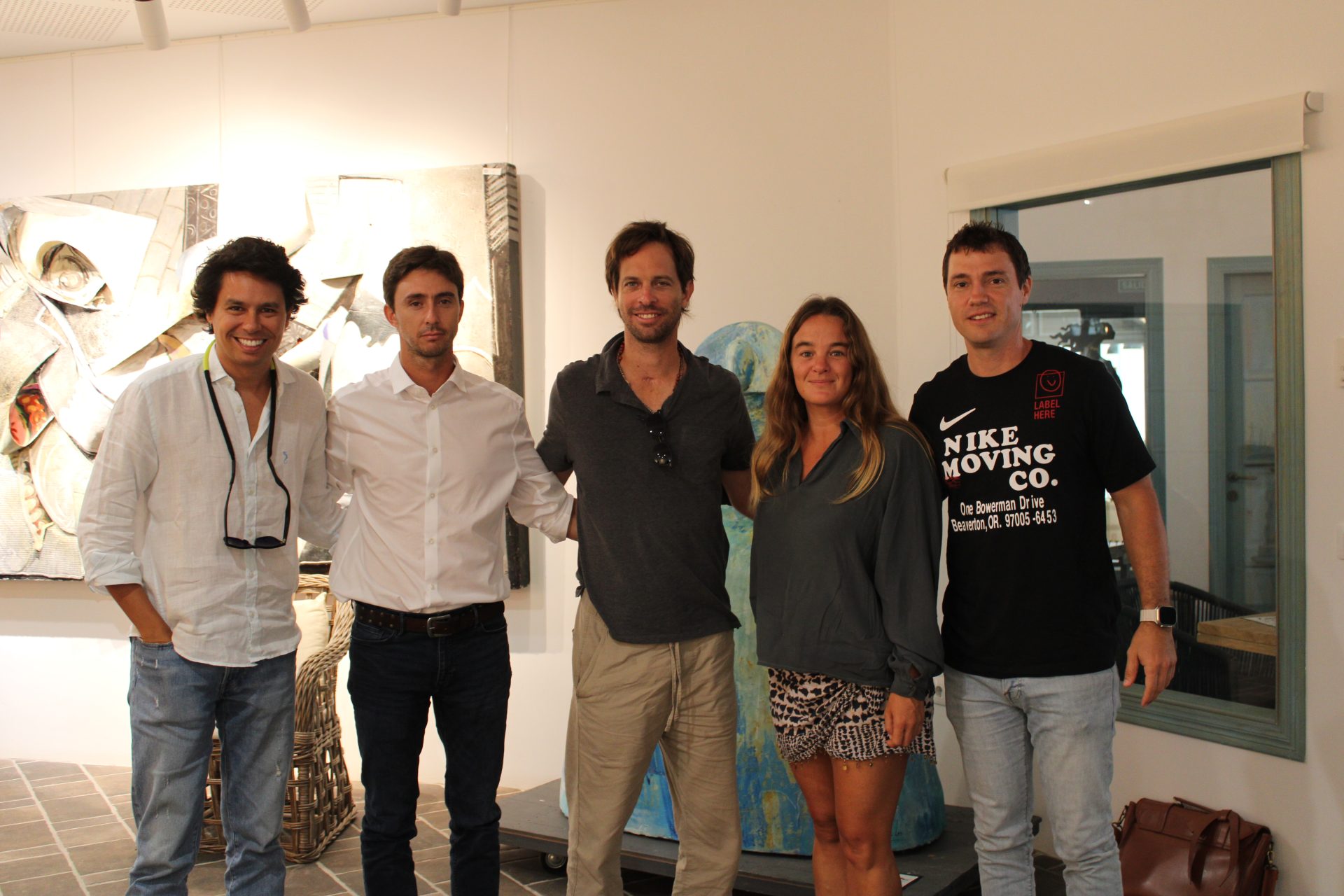
En plena celebración del Torneo Internacional de Polo de Sotogrande, en nuestro Encuentro hemos querido conocer con mayor profundidad el trabajo diario que se esconde detrás del espectáculo deportivo que disfrutan miles de personas cada verano
 Sotogrande en agosto es sinónimo de polo. Un deporte enraizado en su historia desde su fundación hace 60 años, y de los que las 52 ediciones de su Torneo Internacional le han hecho ser la capital mundial de este deporte cada mes de agosto.
Sin embargo, tras todo este espectáculo deportivo y evento social para miles de personas cada año, hay un enorme trabajo diario de organizadores y equipos que es desconocido para el gran público. Un esfuerzo de decenas de personas que comienza desde meses antes que ruede la bocha y que hemos querido conocer en nuestro Encuentro de agosto.
Para ello, hemos reunido en la mesa de Fresco Marina a miembros de Minuto7, empresa que organiza competiciones de polo por todo el mundo incluyendo la temporada de Ayala en Sotogrande, como Malena Stirling, su responsable de Hospitality; Juan Pedro Girou, que ha sido petisero, piloto y polista y el fisioterapeuta Matías Pérez. También contamos con Álvaro Castillejo en representación de Ayala y el polista Clemente Zabaleta, actualmente en el equipo de Sainte Mesme.
Como nos comentan, este deporte requiere un tremendo trabajo para moverse por todo el mundo por parte de los equipos, y para acoger a cientos de personas y caballos en un mismo lugar por los organizadores de las competiciones. “Es muchísimo trabajo. Organizar un torneo tan importante como éste requiere un esfuerzo logístico enorme”, explica Malena. “Cada equipo que viene de fuera puede necesitar alquilar 50 casas y más de cien coches, además de todo lo relacionado con el alojamiento de los caballos. Y eso que hoy se mueven menos caballos que antes”, afirma Malena.
“Hay caballos que sí viajan, pero hoy en día los equipos ya tienen una base de caballos preparados allá donde van a jugar”, nos explica Juan Pedro. “También por el propio descanso de los caballos”, añade Clemente. “Es difícil que un caballo juegue todo el año, puede hacerlo siete u ocho meses, pero nunca seguidos”, confirmando que, realmente, los caballos tienen más descanso que los propios polistas.
De hecho, como nos confirma Clemente, para un jugador de élite “la temporada dura todo el año. En Argentina comienza en febrero la temporada chica, en Europa, en España, Francia o Inglaterra, arranca en marzo hasta octubre; y ahí ya enganchas con la temporada principal de Argentina, de noviembre a diciembre y también tienes Dubai y EEUU, que comienza en diciembre”.
“Van enganchando de una temporada a otra por todo el mundo. No tienen ni dos meses seguidos para descansar”, explica Juan Pedro. “No paran en todo el año”, confirma Malena, “y además el nivel de exigencia deportiva actual es mucho más alto que antes. Ahora los polistas deben cuidarse como cualquier otro deportista de élite”.
“Son deportistas de alto rendimiento”, confirma el fisioterapeuta Matías. “Físicamente el polo es mucho más exigente de lo que la gente cree. No hay un músculo que no trabaje y exige tanto que puedes jugar dos chukker y casi no poder andar al día siguiente. Además, el trabajo diario de los polistas es mucho más que sólo jugar los partidos”.
“Lo más importante es que no se lesionen por sobrecarga de los músculos habituales”. nos detalla Matías. “Si haces una resonancia de sus abductores por ejemplo, un médico diría que sufren de tendinopatía, pero es una adaptación propia de este deporte al sujetar con las piernas un animal de 500 kilos que alcanza los 60 km/hora durante todo el año. Aparte están las lesiones propias de las eventualidades de un deporte de riesgo como éste”.
Esta dedicación tan constante requiere un importante sacrificio personal y familiar, por lo que el polo cuenta con un importante factor vocacional y de tradición familiar.
“En mi caso vengo de una familia de polistas, es lo que he vivido siempre y desde los cinco años no lo dudé, para mí lo normal era dedicarse al polo. Mi padre y mis tíos jugaban y viajaban todo el año y yo comencé a viajar con 17 años como petisero hasta que empecé a jugar profesionalmente. Era algo natural para mí”, nos comenta Clemente.
“Yo nací en este mundo”, comienza Malena con una sonrisa. “Mi padre se dedicó a esto toda su vida y fue durante muchos años director de Santa María Polo Club. Mi familia en Uruguay juega también, con lo que en casa sólo se habla de polo. Sin embargo, durante años no quise saber nada de todo esto, pero hace dos años volví para unirme a Minuto7 y formar parte de esta empresa que ha profesionalizado la organización de torneos por todo el mundo”.
“Yo al contrario”, comienza Juan Pedro, “mi padre trabajó en el campo toda la vida pero sin relación con el polo. A mí me gustaban los caballos y comencé con 17 años como petisero, aprendiendo sobre este deporte y su mundo. Después estuve con Manu (Cereceda, el CEO y cofundador de Minuto7) como petisero y posteriormente piloto (preparador de los caballos)”.
Álvaro, por su parte, es hijo del polista Luis Castillejo, pero su incorporación a este mundo es muy reciente. “El interior del polo lo había vivido muy por encima hasta ahora. Mi padre era profesional y estaba muy involucrado, pero no le hacía ninguna gracia verme vinculado al polo encima de un caballo. Él conocía perfectamente los riesgos de este deporte y siempre le tuvo mucho respeto. De pequeño mi hermano y yo montamos mucho pero nunca nos incentivó a jugar. Al final, me he visto en este mundo, pero tras el telón”.
“La mayoría del público no es consciente de la magnitud de la infraestructura que requiere este deporte, pero la organización es de una complejidad enorme”, señala Álvaro. “Ellos van a la cancha a ver el espectáculo y a disfrutarlo también como evento social, pero muchos ni siquiera saben quién está jugando. Ahora desde Ayala estamos intentando cambiar eso, queremos abrir este deporte al público en general y que la mayoría sepa apreciar que lo que tenemos aquí es de lo mejor del mundo”.
“El público no conoce la verdadera realidad del polo”, añade Malena. “Esa imagen elitista es un concepto erróneo. Hay mucho trabajo y muchas vidas detrás para que un polista se suba a un caballo”.
“Y por la parte familiar es más duro que lo que la gente cree”, interviene Clemente. Es muy bonito viajar a lugares increíbles como éste y hacer lo que te gusta, pero estás lejos de tu país y de tu familia y amigos todo el año. Al final tu equipo, compañeros, petiseros, veterinarios… se convierte en otra familia con la que convives todo el año”.
No obstante, a la pregunta de si alguno se dedicaría a otra cosa, todos responden con una rotunda negativa. “Nos encanta lo que hacemos y para nosotros es más que un trabajo. Amamos este deporte y es nuestro modo de vida”, interviene Malena. “Este ritmo no se podría llevar de otra forma”.
Ya que el polo supone el traslado de familias enteras, precisamente por las comodidades que ofrece Sotogrande y su entorno más allá de la competición, nuestros invitados nos confirman que es uno de los destinos favoritos. “Sin lugar a duda. Cumple todos los requisitos para ser el mejor y no hay un jugador que no quiera venir. Ojalá la temporada aquí durase más tiempo”, afirma Juan Pedro.
“Además tanto Minuto7 y Ayala somos conscientes de lo que significa el polo para Sotogrante. Está en su identidad y su cultura, con lo que trabajamos para que sea una experiencia al nivel de esa exigencia”, aseguran Malena y Álvaro, orgullosos de formar parte de una actividad tan especial para esta zona.
_____________________________________________________
Gatherings: Behind the scenes at the Polo Grounds
During the celebration of the Sotogrande International Polo Tournament, here at our Gathering we wanted to know more about the daily work that goes on behind the sporting spectacle enjoyed by thousands of people every summer.
In August Sotogrande is synonymous with polo. A sport rooted in its history since its foundation 60 years ago, and of which the 52 years of its International Tournament have made it the world capital of this sport every August.
However, behind all the sporting spectacle and social event that thousands of people attend every year, an enormous effort is made every day by organisers and crews unknown to the general public. An effort of dozens of people that starts months before the ball rolls and that we wanted to get to know in our August gathering.
To this end, we have brought together at the Fresco Marina table members of Minuto7, a company that organises polo competitions all over the world, including Ayala’s Sotogrande season. Among them are Malena Stirling, its Hospitality Manager; Juan Pedro Girou, former stable hand, driver and polo player; and physiotherapist Matías Pérez. We also have Álvaro Castillejo representing Ayala and Polo player Clemente Zabaleta, currently on the Sainte Mesme team.
As they tell us, the sport requires a tremendous amount of work in order to get the teams to move all over the world, and to host hundreds of people and horses in one place per competition organisers. «It’s a lot of work. Organising a tournament as important as this one requires a huge logistical effort,» explains Malena. «Each team coming from abroad may need to rent 50 houses and more than a hundred cars, as well as all the accommodation arrangements for the horses. And that’s because there are fewer horses on the move today than there used to be,» says Malena.
«There are horses that do travel, but nowadays the teams already dispose of a pool of prepared horses wherever they go to play», explains Juan Pedro. «Also, for the horses’ own relaxation,» adds Clemente. «It is difficult for a horse to play all year round, it can play for seven or eight months, but never continuously», confirming that, in reality, the horses get more rest than the polo players themselves.
In fact, as Clemente confirms, for an elite player «the season lasts the whole year. In Argentina the minor season starts in February, in Europe, in Spain, France or England, it starts in March and lasts until October; and then comes the main season in Argentina, which runs from November to December. There is also Dubai and the USA, where the season starts in December».
«They bounce from one season to the next all over the world. They don’t even have two consecutive months to rest», explains Juan Pedro. «They don’t stop throughout the year», confirms Malena, «and besides, the current level of sporting demand is much higher than it used to be. Nowadays, polo players have to take care of themselves like any other elite athlete».
«They are high-performance athletes,» confirms physiotherapist Matías. «Physically, polo is much more demanding than people think. There isn’t a muscle that is not worked and it demands such a great deal that one can play two chukker and hardly be able to walk the next day. Plus, the polo players’ daily work is much more than just playing the games.»
«The most important thing is that they don’t get injured due to overloading the usual muscles,» explains Matías. «If you do an MRI of their adductors for example, a doctor might say that they suffer from tendinopathy. However, this is an inherent adjustment to the sport, as their legs have to hold on to a 500-kilo animal that reaches 60 km/hour all year round. Apart from that, there are also injuries that are inherent to the eventualities of a risky sport like this.»
Such a constant dedication requires an important personal and familial sacrifice, which is why polo has an important vocational aspect and a strong family tradition.
«In my case I come from a family of polo players, it is what I have always experienced, and I never doubted it from the age of five, to me it was normal to devote oneself to polo. My father and uncles played and travelled all year round and I started to travel at the age of 17 as a polo player until I started to play professionally. It was something natural for me,» says Clemente.
«I was born into this world,» Malena begins with a smile. «My father was involved in it all his life and for many years he was the director of Santa María Polo Club. My family in Uruguay also play polo, which means we only talk about polo at home. However, for years I didn’t want to be involved in all this, but I came around to it two years ago and joined Minuto7 to become part of a company that has professionalised the organisation of tournaments all over the world».
«For me it was the opposite», Juan Pedro begins, «my father worked in the fields all his life without any relation to polo. I liked horses and I started at the age of 17 as a stable hand, learning about this sport and its world. Then I worked with Manu (Cereceda, the CEO and co-founder of Minuto7) as a stable hand and later as a rider (horse trainer)».
Meanwhile, Álvaro is the son of polo player Luis Castillejo, although he has only recently joined the world of polo. «I had lived very much on the inside of polo up to now. My father was a professional and was very involved, but he was not at all happy to see me playing polo on a horse. He was well aware of the risks of the sport and always had a lot of respect for it. When I was a kid, my brother and I rode a lot but he never encouraged us to play. In the end, I eventually came into this world, but from behind the curtain».
«Most of the public is not aware of the magnitude of the infrastructure that this sport requires, but the organisation is enormously complex,» says Álvaro. «They go to the pitch to watch the spectacle and to enjoy it as a social event, but many don’t even know exactly who is playing. From Ayala we are trying to change that, we want to open up this sport to the general public so that the majority can appreciate the fact that what we have here is among the best in the world».
«The public doesn’t know the true reality of polo,» adds Malena. «The elitist image of polo is a misconception. There is a lot of work and many lives involved behind the scenes for a polo player to get on a horse».
«And in terms of work and family, it’s harder than people think,» Clemente interjects. It’s great to travel to incredible places like this and do what you love, but you’re away from your country and your family and friends all year round. Ultimately your team, colleagues, groomers, vets… they become another family that you live with all year round.
However, when asked if any of them would devote themselves to anything else, they all answer with a resounding «no». «We love what we do and for us it is more than just a job. We love this sport and it’s our way of life,» says Malena. «This pace would be impossible to keep up any other way».
Given that polo involves the relocation of entire families, it is precisely because of the amenities that Sotogrande and its surroundings offer beyond the competition that our guests confirm that it is one of their favourite destinations. «Without a doubt. It meets all the requirements to be the best and there is not a player who doesn’t want to play here. I wish the season lasted longer here,» says Juan Pedro.
«Moreover, both Minuto7 and Ayala are aware of what polo means to Sotogrande. It is part of its identity and its culture, so we work to make it an experience at the level of that requirement», assured Malena and Álvaro, proud to be part of such a significant activity for the area.