


En esta obra su autora refleja su propia experiencia con el Trastorno Límite de Personalidad, desde su adolescencia hasta la actualidad
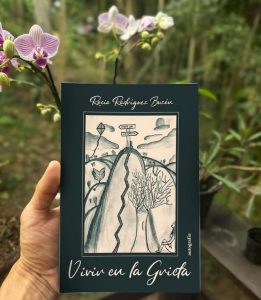 «Vivir en la Grieta» es mucho más que un libro; es un valiente y conmovedor testimonio de Rocío Rodríguez Buzón, una profesora de Filosofía sevillana afincada en Algeciras que ha aprendido a convivir con el Trastorno Límite de la Personalidad (TLP) como Persona Altamente Sensible (PAS). A través de una colección de poemas y relatos íntimos, Rocío invita al lector a sumergirse en su propia experiencia vital, explorando las emociones intensas y contradictorias que la acompañan diariamente.
La autora comparte cómo el diagnóstico de TLP cambió su vida, dándole por fin un nombre a lo que hasta entonces parecía incomprensible para los demás y para ella misma. Rocío nos explica que, mientras otros problemas como la ansiedad o la depresión son más conocidos, la mayoría de la sociedad aún desconoce el TLP, a pesar de la profunda carga emocional que supone. “Es un vaivén emocional enorme”, afirma Rocío, describiendo cómo se siente vivir “al borde de una grieta emocional”, donde la estabilidad es efímera y las emociones parecen nunca estar en equilibrio.
El libro refleja su viaje personal desde la infancia hasta la madurez, incluyendo desde sus primeros poemas creados cuando tenía solo 13 años. Versos escritos durante toda su vida que presentan una especial sensibilidad y una profundidad emocional demostrando cómo la poesía ha sido su forma de canalizar sus emociones más intensas y dolorosas. “Ahí ya estaba esa niña que vivía al borde de la grieta, que lo vivía todo con esa intensidad”, comenta.
Su diagnóstico llegó tras la muerte de su padre, hace unos tres años, aunque sus problemas emocionales comenzaron en la adolescencia. Es entonces, y a través de su terapia en Algeciras, cuando comienza a entenderse mejor y a encontrar técnicas para sobrellevar el trastorno, apoyándose en el entorno natural como fuente de serenidad.
Pero mucho antes de su diagnóstico, para Rocío escribir siempre ha sido su refugio, su propia terapia para expresar lo que a menudo resulta imposible verbalizar, con el que revive momentos duros, pero también encuentra paz y un nuevo propósito.
En este sentido, con «Vivir en la Grieta» su propia familia y amigos han podido conocer una perspectiva distinta de ella, pero también, como nos confirma su autora, varias asociaciones de afectados por problemas de salud mental le han expresado su gratitud por la claridad con la que ha logrado plasmar lo que significa vivir con TLP u otros trastornos mentales. “Si mi libro sirve para ayudar a alguien y a que se comprenda mejor a quienes padecemos estas dolencias, habré cumplido mi objetivo”.
Rocío continúa escribiendo, y unque no sabe cuándo saldrá su próximo proyecto, está segura de que seguirán fluyendo emociones que necesitarán ser plasmadas en palabras. Escribir, para ella, es una necesidad vital que le permite seguir viviendo en la grieta, pero sin asomarse al abismo.
_________________________________
‘Living in the crevice’, poetry on how to live with BPD
In this work by Rocío Rodríguez Buzón, the author reflects her own experience with Borderline Personality Disorder, since her adolescence to the present day.
‘Vivir en la Grieta’ (Living in the crevice) is much more than a book; it is the brave and moving testimony of Rocío Rodríguez Buzón, a philosophy teacher from Seville living in Algeciras who has learned to live with Borderline Personality Disorder (BPD) as a Highly Sensitive Person (HSP). Through a collection of poems and intimate stories, Rocío invites the reader to immerse themselves in her own life experience, exploring the intense and contradictory emotions that accompany her on a daily basis.
The author shares how the diagnosis of BPD changed her life, finally giving a name to what until then seemed incomprehensible to others and to herself. Rocío explains that, while other problems such as anxiety or depression are better known, most of society is still unaware of BPD, despite the profound emotional burden it entails. ‘It’s a huge emotional swing,’ says Rocío, describing how it feels to live “on the edge of an emotional rift”, where stability is ephemeral and emotions never seem to be in balance.
The book reflects her personal journey from childhood to maturity, including her first poems written when she was just 13 years old. Verses written throughout her life that present a special sensitivity and emotional depth demonstrating how poetry has been her way of channelling her most intense and painful emotions. ‘There was already that little girl who lived on the edge of the crevice, who lived everything with that intensity,’ she says.
Her diagnosis came after the death of her father, about three years ago, although her emotional problems began when she was a teenager. It was then, and through her therapy in Algeciras, that she began to understand herself better and to find techniques to cope with the disorder, relying on the natural environment as a source of serenity.
But long before her diagnosis, writing has always been Rocío’s refuge, her own therapy to express what is often impossible to verbalise, with which she relives hard times, but also finds peace and a new purpose.
In this sense, with ‘Living in the crevice’ her own family and friends have been able to get to know a different side of her, but also, as the author confirms, several associations of people affected by mental health problems have expressed their gratitude for the clarity with which she has managed to capture what it means to live with BPD or other mental disorders. ‘If my book can help someone to understand those of us who suffer from these illnesses better, I will have achieved my goal.’
Rocío continues to write, and although she doesn’t know when her next project will come out, she is sure that emotions will continue to flow and they will need to be put into words. Writing, for her, is a vital element that allows her to continue living in the crevice, yet without looking into the abyss.